

Key takeaways
- Find the best hand planes for smooth shavings, trim work, and end grain. Compare five bench, block, and Japanese planes to pick the right one.
A sharp hand plane turns a rough board into a smooth, flat surface with thin, curling shavings and no dust cloud, and it does the job with a quiet push that a power planer cannot match. The tool holds a honed iron at a fixed angle in a flat sole, so each pass peels away a controlled sliver of wood and leaves a surface ready for finish. That control is why furniture makers and trim carpenters keep a plane on the bench even when a full shop of power tools stands nearby. A plane fits a sticking door, levels a proud joint, chamfers a sharp edge, and cleans up end grain in seconds, all without a cord or a setup change.
The best hand planes share a flat sole, a blade that holds an edge, and an adjustment that moves the iron in small, predictable steps. Cheap planes fail on those three points: the sole rocks, the iron dulls fast, and the adjuster jumps instead of creeping. This roundup covers five planes that clear that bar in different ways, from a premium Stanley smoother with a thick A2 iron to two compact Japanese pull planes for detail work. Match the plane to the work you do most often.
As an Amazon Associate, we earn from qualifying purchases.
Table of Contents
- Quick Answer
- Stanley No. 4 Sweetheart Smoothing Bench Plane 12-136
- Stanley No. 4 Adjustable Bench Plane 12-404
- Amazon Basics No. 4 Adjustable Smoothing Bench Hand Plane
- KAKURI Japanese Hand Plane 42mm
- SUIZAN Kanna Japanese Hand Plane SK-001
- How to Choose
- Who Should Skip It
- Frequently Asked Questions
- Conclusion
- Product and ASIN Reference
Quick Answer
If you want one smoothing plane for furniture work, the Stanley No. 4 Sweetheart 12-136 is the strongest pick here, with a thick A2 iron and a one-piece base and frog. The Stanley 12-404 is the classic lower-cost bench plane, the Amazon Basics No. 4 is the budget starter, and the KAKURI and SUIZAN kanna suit detail trimming and chamfering.
Stanley No. 4 Sweetheart Smoothing Bench Plane 12-136

The Stanley No. 4 Sweetheart 12-136 is the premium smoother in this roundup, and it earns that place with a thick iron and a rigid body rather than with decoration. The iron is 2 inches wide and 1/8 inch thick, cut from A2 steel that holds an edge through long smoothing sessions. A thick iron resists chatter, the vibration that leaves faint ripples across a board, so the surface comes out cleaner with fewer passes. The base and frog are cast as one piece, so the iron seats firmly and the mouth stays consistent.
At 10-5/8 inches long with a 2-1/2 inch wide sole, this is a true No. 4 smoother, sized for flattening small panels, smoothing table tops, and cleaning up glued joints. The tote and front knob are cherry wood, shaped to fill the hand without hot spots, and the cast iron body carries enough weight to keep the plane moving through difficult grain without stalling. The depth adjuster and lateral lever set the cut and center the iron without removing the lever cap.
This plane suits a woodworker who smooths furniture parts every week and wants a tool that stays set between sessions. The trade-offs are weight and setup: a cast iron smoother is heavier than a wooden Japanese plane, and any new bench plane benefits from honing the iron and checking the sole before the first serious job. It sits in the premium tier of the Stanley range, above the standard 12-404, and the thicker iron and one-piece casting are the reasons to pay for it.
Specs
- Brand: STANLEY
- Model: 12-136
- Type: No. 4 smoothing bench plane
- Blade width: 2 inches
- Blade material: A2 steel
- Blade thickness: 1/8 inch
- Body: Cast iron with one-piece base and frog
- Handle material: Cherry wood tote and knob
- Length: 10-5/8 inches
- Sole width: 2-1/2 inches
- Frog angle: 45 degrees
Stanley No. 4 Adjustable Bench Plane 12-404

The Stanley No. 4 Adjustable Bench Plane 12-404 is the familiar workhorse of the Stanley bench plane line, and it has stayed in workshops for so long because the pattern is simple and easy to keep working. The gray cast iron base has precision-ground sides and a bottom machined to run flat and true, so the plane registers evenly instead of rocking on a high corner. The 2-inch cutter is hardened, tempered high-carbon chrome steel, and the frog is adjustable, which lets you open or close the mouth to suit the cut. A tight mouth supports the fibers ahead of the iron and reduces tear-out on figured grain, while a wider mouth clears thicker shavings faster.
The knob and handle are contoured and made from polished high-impact plastic, which shrugs off shop knocks and damp air that would swell or crack a wooden tote. An epoxy coating on the cast iron base adds protection against rust in a garage or basement shop. At 2.75 pounds, the 12-404 is light enough to use for extended smoothing without tiring the arm, yet heavy enough to hold its line through a cut. The depth wheel and lateral lever give fine control over the iron.
This plane is the sensible pick for a first bench plane or a second smoother that lives on the bench for everyday jobs. It smooths drawer fronts, levels edge joints, and trims end grain on small parts without fuss, and parts are widely available because the Bailey pattern is the most common bench plane design in use. It does not have the thick A2 iron or the one-piece casting of the Sweetheart 12-136, so it needs more frequent honing on hard woods and a little more care in setup, but it delivers the same No. 4 smoothing geometry at a lower tier.
Specs
- Brand: STANLEY
- Model: 12-404
- Type: No. 4 adjustable bench plane
- Cutter width: 2 inches
- Cutter material: Hardened, tempered high-carbon chrome steel
- Body: Cast iron with epoxy coating
- Base: Precision-ground sides and bottom
- Frog: Adjustable, 45-degree angle
- Weight: 2.75 pounds
Amazon Basics No. 4 Adjustable Smoothing Bench Hand Plane
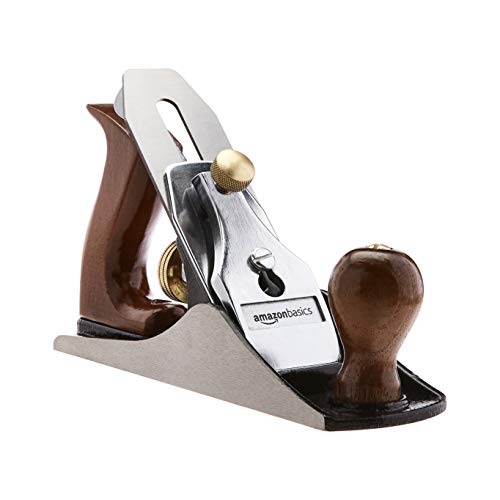
The Amazon Basics No. 4 is the budget entry in this roundup, and it follows the same Bailey-style bench plane pattern as the Stanley No. 4 models, with a cast iron body, a 2-inch steel alloy blade, and an adjustable gear for setting the depth of cut. The body measures 10 inches long, in the same smoothing class as the Stanley planes, and the cast iron construction gives it the mass to stay steady through a pass. Wooden handles with a contoured grip sit at the front and rear, and the depth adjustment wheel moves the blade in small steps so you can dial the shaving from coarse to fine.
At 3.82 pounds, this plane is the heaviest of the three bench planes here, and that extra mass is both a help and a burden. The weight pushes the iron through the cut and damps vibration on straight-grained boards, which suits a beginner who is still learning to keep even pressure on the tote. The same weight makes it more tiring over a long session. The adjustable frog and lateral lever follow the standard layout, so skills learned on this plane transfer directly to any other No. 4 bench plane.
This is the right pick when the budget is tight and the work is light: smoothing small boards, easing edges on shelves, and fitting a sticking drawer or door. It is not the plane for daily furniture work, where the thicker iron and tighter machining of the Stanley Sweetheart pay for themselves in fewer honing stops. Expect to spend time on setup before the first good shaving, because the iron needs honing and the sole and frog deserve a check.
Specs
- Brand: Amazon Basics
- Model: DS-WPAMZ002
- Type: No. 4 adjustable smoothing bench plane
- Blade width: 2 inches
- Blade material: Steel alloy
- Body: Cast iron
- Handles: Wooden with contoured grip
- Length: 10 inches
- Weight: 3.82 pounds
- Adjustment: Depth adjustment wheel and lateral lever
KAKURI Japanese Hand Plane 42mm

The KAKURI Japanese Hand Plane 42mm is a kanna, a traditional Japanese pull plane, and it works in the opposite direction from the Western bench planes in this roundup. Instead of pushing the tool away from the body, you pull it toward you, which gives fine control over the cut and lets you watch the shaving curl out of the mouth as you work. The body is ECO oak, light and warm in the hand, and the 42 mm high-carbon steel blade is sharpened by craftsmen in Japan. At 8.1 ounces and 5.9 inches long, it is a fraction of the weight of a cast iron bench plane, so it is easy to carry to the workpiece and simple to guide along a narrow edge.
This compact size makes the KAKURI the detail tool of the group. It chamfers edges, smooths small panels, trims tenon shoulders, and cleans up end grain on parts too small to clamp under a bench plane. The pull stroke excels at controlled, shallow cuts, and the narrow 42 mm blade follows slight curves that a wide iron cannot. The blade is set by tapping it with a small mallet, a method that feels strange at first and becomes second nature after a few sessions. Keep the oak body dry and store it where it will not roll off the bench.
Buy this plane when your work already includes a bench plane and you want a second tool for edges and small parts, or when you build small boxes and models where a full-size smoother is too big. It will not flatten a wide table top or joint a long board edge, and the pull stroke takes practice if you have only ever pushed a plane. For fine chamfering and smoothing on small work, its light weight and direct feedback are hard to match.
Specs
- Brand: KAKURI
- Model: P-150
- Type: Japanese hand plane, kanna
- Blade width: 42 mm
- Blade material: Japanese high-carbon steel
- Body: ECO oak
- Dimensions: 5.9 x 2.1 x 1.6 inches
- Weight: 8.1 ounces
- Origin: Made in Japan
- Stroke: Pull stroke
SUIZAN Kanna Japanese Hand Plane SK-001

The SUIZAN Kanna SK-001 is the second Japanese pull plane in this roundup, and it pairs a beech wood body with a Japanese steel blade in a compact package that weighs just 6 ounces. The blade is 1.7 inches wide, or 42 mm, the same width as the KAKURI, and the body measures 5.9 by 2.2 by 1.6 inches, so it fits in one hand and reaches into corners where a bench plane cannot go. A user manual is included, which helps a first-time kanna owner learn the tapping method for setting the blade. Like the KAKURI, it is pulled toward the user rather than pushed, and that pull stroke gives the control needed for fine trimming on small parts.
The beech body is lighter in color and a little softer than oak, which makes it comfortable to hold. The hand-powered design has no adjusters, knobs, or levers, so there is nothing to loosen or wear out, and the whole tool is a blade, a wedge, and a shaped block of wood. The cutting depth is set by tapping the blade deeper or tapping the body to retract it, and small adjustments come quickly once the feel is learned.
This plane suits trim work, chamfering, and smoothing on small wooden parts, craft projects, and model work, where its light weight and one-hand control matter more than raw cutting width. It is the lightest tool here, which makes it the easiest to use for long stretches of detail work, but it cannot power through a wide board the way a cast iron bench plane can. Pair it with a No. 4 bench plane and the two tools cover nearly every smoothing and trimming task a home workshop produces.
Specs
- Brand: SUIZAN
- Model: SK-001
- Type: Japanese hand plane, kanna
- Blade width: 1.7 inches, 42 mm
- Blade material: Japanese steel
- Body: Beech wood
- Dimensions: 5.9 x 2.2 x 1.6 inches
- Weight: 6 ounces
- Power source: Hand powered
- Included: User manual
How to Choose
Start with the size of the work, because plane size follows board size. A No. 4 smoothing plane, about 10 inches long with a 2-inch iron, is the standard first bench plane: it smooths panels, levels joints, and trims end grain on furniture parts without being too long to handle or too short to stay flat. Longer planes, such as a No. 5 jack plane, bridge high spots on rough boards and joint edges, while a small block plane or a compact kanna handles chamfers, tenons, and end grain on parts that are too small for a bench plane. If you buy one plane, buy a No. 4; if you buy two, add a small block plane or a kanna for detail work.
Next, look at the iron. A thicker iron resists chatter and holds its edge longer, which is why the 1/8-inch A2 iron on the Stanley Sweetheart 12-136 is the standout feature of this roundup. Standard high-carbon steel irons, such as the one on the 12-404, sharpen easily but need honing more often on hard woods. Check the adjustment as well: a bench plane should have a depth wheel and a lateral lever that move the iron in small, smooth steps, and the frog should seat firmly against the body with no rocking.
Body material and weight decide how the plane feels over a long session. Cast iron bodies are heavy, stable, and durable, and their weight holds the iron in the cut, but they tire the arm on overhead or vertical work. Wooden-bodied Japanese planes are far lighter and easier to guide on small parts, but they need dry storage. Finally, be honest about sharpening. Every hand plane needs a honed edge, and the best plane in this roundup still cuts poorly with a dull iron. If you are willing to learn honing, a bench plane pays you back for years, so budget for a sharpening stone and a honing guide with the plane itself.
Who Should Skip It
Hand planes are the wrong tool when the job is bulk stock removal or when the boards are long, rough, and many. A thickness planer or a power jointer will flatten a stack of rough lumber in the time a hand plane needs for a single board. Hand planes also suit poorly anyone who wants a tool that works straight from the box with no setup, because every plane here needs the iron honed and the adjustments checked before it cuts well.
People with limited hand strength or wrist trouble should also think carefully, because a cast iron bench plane weighs several pounds and the work is done by arm and shoulder. A lighter Japanese kanna is easier on the wrist, but it still needs a firm grip and a steady pull. If your work is mostly sheet goods, plastic, or metal, skip hand planes entirely: they are wood tools, and they dull fast and cut poorly on anything else. A hand plane earns its place when the work is fine smoothing, fitting, and trimming on solid wood, not when the job calls for speed or for materials it was never made to cut.
Frequently Asked Questions
What size hand plane should a beginner buy first?
A No. 4 smoothing plane is the usual first buy, because it is about 10 inches long with a 2-inch iron, which suits panels, joints, and small furniture parts. It is large enough to stay flat on a board and small enough to control with a hand on the knob and one on the tote. The Stanley 12-404 and the Amazon Basics No. 4 in this roundup are both No. 4 planes, and either one teaches the tuning and sharpening skills that carry over to every other bench plane.
How is a Japanese hand plane different from a Western bench plane?
A Japanese kanna is pulled toward the user, while a Western bench plane is pushed away, and that change of direction gives the pull plane finer control on small cuts. Kanna bodies are wood, usually oak or beech, with a blade held by a wedge and set by tapping, while Western planes have cast iron bodies with depth wheels and lateral levers. The KAKURI and SUIZAN planes here are both kanna, and they suit detail trimming and chamfering where a bench plane is too large.
Do new hand planes need sharpening before first use?
Yes, in almost every case. A new plane often arrives with an iron that is ground but not honed to a fine edge, and the first good shaving comes only after honing the iron. The sole and frog also deserve a check, because a high spot or a loose frog will leave tracks on the wood. Plan on a sharpening stone and a honing guide as part of the purchase, and treat the first tuning session as part of learning the tool.
What is the difference between a smoothing plane and a block plane?
A smoothing plane, such as a No. 4, is a bench plane about 10 inches long with a 2-inch iron, made for flattening and smoothing board faces after rough work. A block plane is much smaller, usually 6 inches long or less, and it is held in one hand for trimming end grain, chamfering edges, and fitting small joints. The smoothing plane does the broad work, the block plane does the detail work, and many woodworkers keep both on the bench.
Conclusion
The best hand planes for smooth wood shavings and trim are the ones that match your bench, your budget, and the size of the work in front of you. The Stanley No. 4 Sweetheart 12-136 is the strongest all-round smoothing plane here, with a thick A2 iron and a one-piece base and frog. The Stanley 12-404 is the classic No. 4 for everyday bench work, and the Amazon Basics No. 4 is the budget way into the same pattern. The KAKURI 42mm and the SUIZAN SK-001 kanna cover the detail work that bench planes cannot reach, with light wooden bodies and a pull stroke made for chamfers.
Choose a No. 4 bench plane first, add a kanna or a block plane second, and put time into honing the iron before judging any plane. A sharp iron, a flat sole, and a fine adjustment turn any of these five planes into a tool that leaves smooth shavings and a surface ready for finish.
Product and ASIN Reference
| Product | ASIN |
|---|---|
| Stanley No. 4 Sweetheart Smoothing Bench Plane 12-136 | B002B56CUO |
| Stanley No. 4 Adjustable Bench Plane 12-404 | B000FK3WI2 |
| Amazon Basics No. 4 Adjustable Smoothing Bench Hand Plane | B07V81CNJN |
| KAKURI Japanese Hand Plane 42mm | B000ALF4GO |
| SUIZAN Kanna Japanese Hand Plane SK-001 | B071CF33BG |
More from Amazon
Programs that pair well with the guide above. Offers and eligibility are set by Amazon and may change.
Free shipping on eligible items, Prime Video and more. Eligible new members can start with a free trial.
Start a Prime free trialAd-free music streaming. Eligible new subscribers can start with a free trial.
Try Music Unlimited freeA Prime membership for ages 18-24 with a trial period. Eligibility is set by Amazon.
See Prime for Young AdultsAudiobooks and podcasts to listen to on the go. Eligible new members can start with a free trial.
Try Audible freeAs an Amazon Associate we earn from qualifying purchases.




Write Your Review
No reviews yet. Be the first to share your experience!