

Key takeaways
- Compare the best belt sanders for woodworking, from heavy-duty 4-inch models to cordless and budget picks, by motor, belt size, speed, and dust control.
A belt sander is the fastest way to flatten a glued-up panel, strip an old finish, or level a rough board, and it does in minutes what a sheet of sandpaper on a block would take an afternoon to finish. The moving belt covers a wide path with every pass, so high spots come down evenly and a tabletop or a deck board ends up flat instead of wavy. For woodworkers who build furniture, refinish floors, or prep lumber for a project, a good belt sander is one of the first power tools that earns its place on the bench.
The best belt sanders match motor strength to belt size, so the belt keeps moving at a steady pace even when you press into hardwood or a thick coat of paint. Variable speed matters when you move from rough shaping to finer work, and a dust bag or a vacuum port keeps the surface clean enough to see what you are doing. This guide compares five belt sanders only, from a heavy-duty 4-inch model to a cordless tool and a budget pick, using the specifications published on each Amazon listing.
As an Amazon Associate, we earn from qualifying purchases.
Table of Contents
- Quick Answer
- 1. Makita 9903 Belt Sander — Best Overall
- 2. Makita 9403 Belt Sander — Best for Heavy Stock Removal
- 3. DEWALT DCW220B Belt Sander — Best Cordless
- 4. WEN 6321 Belt Sander — Best Budget Pick
- 5. BLACK+DECKER DS321 Dragster Belt Sander — Best for Edges and Tight Spots
- How to Choose
- Who Should Skip It
- Frequently Asked Questions
- Product and ASIN Reference
Quick Answer
For most woodworkers, the Makita 9903 is the best belt sander to buy first, with an 8.8-amp motor, variable speed from 690 to 1,440 feet per minute, and a 3-inch by 21-inch belt that suits furniture, doors, and deck boards. Buyers who need maximum stock removal should look at the Makita 9403, and the WEN 6321 suits occasional home projects.
1. Makita 9903 Belt Sander — Best Overall

The Makita 9903 earns the top spot because it covers the widest range of woodworking jobs with the least fuss. Its 8.8-amp motor drives a 3-inch by 21-inch belt at a variable speed of 690 to 1,440 feet per minute, which means the same tool can strip an old finish with coarse paper and then slow down for a finer pass on a visible surface. Electronic speed control holds the belt speed steady under load, so the sander keeps cutting at a consistent pace when you press into hardwood or a thick coat of paint instead of bogging down halfway through a pass.
Control is where this sander stands out in daily use. An auto-tracking belt system keeps the belt centered without manual adjustment, so you spend less time stopping to nudge the belt back into place. The nose and the side of the sander sit flush to a wall, which lets you sand right up to a baseboard or the edge of an adjoining surface without leaving an unsanded strip. A large front grip gives you a secure hold with both hands.
This is the sander to choose if you want one tool for furniture building, cabinet work, door refinishing, and deck boards. The combination of a strong motor, a wide speed range, and a compact 11-5/8-inch body handles everything from rough leveling to finish prep. A dust bag is included, and the tapered dust spout connects to a vacuum for longer indoor jobs.
Specs
- Brand: Makita
- Model: 9903
- Motor: 8.8 amps
- Speed: 690 to 1,440 feet per minute, variable
- Belt size: 3 x 21 inches
- Power source: Corded electric, 120 volts
- Weight: 9.5 pounds
- Cord length: 16.4 feet
- Dust collection: Dust bag included, vacuum compatible
- Included: 80-grit abrasive belt, dust bag
- Warranty: 1-year limited warranty
2. Makita 9403 Belt Sander — Best for Heavy Stock Removal

The Makita 9403 is the pick for buyers who need to remove material fast across large, flat surfaces. Its 11-amp motor is the strongest in this guide, and it drives a 4-inch by 24-inch belt at 1,640 feet per minute, so each pass covers more wood and takes off more material than any 3-inch model here. That wide belt makes it the right tool for flattening a glued-up tabletop, leveling a deck, or stripping paint from a floor, where a narrower sander would take far longer to cover the same area.
The 9403 is a fixed-speed machine, which keeps it simple: plug it in, switch it on, and sand. The lack of a speed dial is a trade-off, since you cannot slow the belt for delicate veneer or thin stock, but for heavy stock removal the single speed is an advantage, because the motor holds a constant pace under load and there is nothing to adjust mid-pass. Labyrinth construction seals the motor and bearings from dust, which helps the tool last through long sessions on dusty jobs. A large front grip sits low on the body for control, and the dust bag swivels a full 360 degrees, so it stays out of the way whether you sand horizontally, vertically, or overhead.
Buy the 9403 when your projects are big and your time is short. It suits floor installers, deck builders, and furniture makers who flatten wide panels and rough-sawn lumber on a regular basis. At about 13 pounds it is the heaviest sander in this guide, and that weight works in your favor on flat work, because the machine presses the belt into the wood with its own mass and you do not need to push down hard.
Specs
- Brand: Makita
- Model: 9403
- Motor: 11 amps
- Speed: 1,640 feet per minute, fixed
- Belt size: 4 x 24 inches
- Power source: Corded electric, 120 volts
- Weight: 13 pounds
- Dust collection: Dust bag, swivels 360 degrees
- Included: 80-grit abrasive belt, dust bag
- Warranty: 1-year limited warranty
3. DEWALT DCW220B Belt Sander — Best Cordless

The DEWALT DCW220B is the only cordless belt sander in this guide, and it is the pick for anyone who already owns DEWALT 20V MAX batteries and needs to sand where there is no outlet nearby. A brushless motor drives a 3-inch by 21-inch belt, and a variable speed dial lets you match the belt pace to the work, from gentle passes on softwood to faster stock removal on hardwood. Going cordless removes the cord from the work area entirely, which matters when you sand a deck, a fence, or a piece of trim installed far from a wall socket.
This is a tool-only listing, which means the battery and the charger are sold separately, so check your battery supply before you buy. If you already have charged 20V MAX packs in the shop, the sander slots straight into your kit and shares batteries with your other DEWALT tools. A dust bag is included, along with a swivel dust port that keeps the bag clear of the work, and an 80-grit sanding belt comes in the box. The brushless motor design runs without brushes to wear out, which suits a tool that will see regular use on punch-list work and site jobs.
Choose the DCW220B for trim work, repairs, and outdoor sanding where a cord would slow you down or get in the way. It is a strong match for contractors and homeowners who sand a door edge, a stair tread, or a deck board in place rather than carrying the work back to a bench.
Specs
- Brand: DEWALT
- Model: DCW220B
- Motor: 20V MAX brushless
- Speed: Variable speed dial
- Belt size: 3 x 21 inches
- Power source: Battery powered, 20V MAX battery sold separately
- Dust collection: Dust bag included, swivel dust port
- Included: 80-grit sanding belt, dust bag
4. WEN 6321 Belt Sander — Best Budget Pick
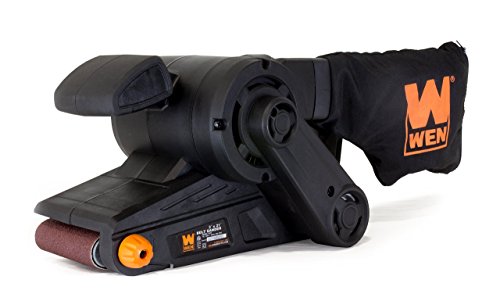
The WEN 6321 delivers the lowest-cost way into belt sanding in this guide, and it is the best budget pick for buyers who sand a few times a month rather than every day. Its 7-amp motor turns a 3-inch by 21-inch belt at 820 feet per minute, which is fast enough to smooth a bookshelf, prep a door for paint, or clean up a rough edge without struggling. The fixed speed keeps the tool simple: there is no dial to set and no mode to choose, so you plug it in and get straight to work.
At 6.2 pounds it is the lightest sander in this guide, which makes it easy to guide with one hand on flat panels and to carry up a ladder for trim work. A lock-on trigger holds the sander running without a constant grip, so your hand does not tire during a long pass across a tabletop. A detachable dust bag catches the bulk of the dust, and the compact body is easy to steer along edges and across wide boards. The kit includes a 60-grit belt, so you can start with coarse stock removal and then switch to finer belts for smoothing.
Buy the WEN if you want a capable belt sander for occasional projects and you would rather spend the savings on sandpaper and stain. The 7-amp motor handles pine, plywood, and painted surfaces well, but it will slow down if you press hard on hardwood, so let the weight of the tool do the work and keep the belt flat.
Specs
- Brand: WEN
- Model: 6321
- Motor: 7 amps
- Speed: 820 feet per minute, fixed
- Belt size: 3 x 21 inches
- Power source: Corded electric, 120 volts
- Weight: 6.2 pounds
- Dust collection: Detachable dust bag
- Included: 60-grit sanding belt, dust bag
- Warranty: 2-year warranty
5. BLACK+DECKER DS321 Dragster Belt Sander — Best for Edges and Tight Spots

The BLACK+DECKER DS321 Dragster fills the gap the straight-bodied sanders leave behind: edges, corners, and vertical surfaces. Its angled belt design sands closer to the edge of an adjoining surface than a standard belt sander, and a retractable hood exposes the top of the sanding belt so you can sand in tight spots and against a wall. A three-position handle adjusts to the angle of the work, which helps when you switch between sanding a flat board and sanding a vertical door frame.
A 7-amp motor drives the 3-inch by 21-inch belt at 800 feet per minute, giving a steady single speed that is easy to manage. There is no speed dial to set, which makes it a good first belt sander for someone who wants to smooth a shelf, prep a door for paint, or shape a door jamb without learning a new tool first. The low-profile body reaches into places a taller sander cannot, and the extended reach suits large surfaces such as floors and countertops. A dust bag is included, along with a medium-grit sanding belt, so the tool is ready to use out of the box.
This is the right choice for edge work, floors, and projects where the sander has to reach up to another surface. The 7-amp motor handles pine, plywood, and painted surfaces well, and the angled design means fewer unsanded strips along baseboards and adjoining boards.
Specs
- Brand: BLACK+DECKER
- Model: DS321
- Motor: 7 amps
- Speed: 800 feet per minute, fixed
- Belt size: 3 x 21 inches
- Power source: Corded electric, 120 volts
- Weight: 7 pounds
- Dust collection: Dust bag included
- Included: Medium-grit sanding belt, dust bag
- Warranty: 2-year warranty
How to Choose
Start with belt size, because it decides how fast you cover a surface. A 4-inch by 24-inch belt, like the one on the Makita 9403, covers the most wood per pass and suits floors, deck boards, and wide tabletops. A 3-inch by 21-inch belt is the standard size for furniture, doors, and general work, and belts in that size are cheap and easy to find in every grit. A shorter 3-inch by 18-inch belt trades coverage for control on edges and narrow parts. Before you buy, check that the belt size matches the paper you already own, since a new size means a new stock of belts.
Motor size and speed range decide how the tool behaves under load. A motor of 9 amps or more holds speed when you press the belt against hardwood or thick paint, while a smaller motor suits light smoothing and softwood. Variable speed is worth having if you work with veneer, soft pine, or finishes that scorch easily, because a slower belt gives you control and keeps the surface cool. A fixed-speed sander is simpler and often cheaper, and it is fine if your work is mostly paint removal and rough smoothing on sturdy wood. Corded models run as long as the job does, while a cordless model suits work away from an outlet, as long as you have charged batteries ready.
Dust collection is the feature buyers notice most after the first hour of sanding. A bag catches enough dust for outdoor work and quick jobs, but indoor sanding calls for a vacuum connection. Weight and grip shape decide comfort on long jobs: a sander around 6 to 7 pounds is easy to guide with one hand, while a heavier tool presses the belt into flat work with its own mass.
Who Should Skip It
Skip a belt sander entirely if your only sanding jobs are tiny touch-ups, such as smoothing a single rough edge or easing a sharp corner. A sanding block and a sheet of paper cost little, make no dust cloud, and give you full control on a small area. A belt sander is built to remove material fast, and on a small job it can take off too much wood before you notice, leaving a dip that is hard to fix.
Skip a belt sander if your work is mostly fine finishing on furniture with a clear coat, where a random orbit sander gives a smoother result. A belt sander cuts in straight lines and can leave visible marks if the grit sequence is rushed, so fine furniture makers usually finish with an orbit sander for the final passes.
Skip the fixed-speed budget models if you regularly sand veneer, thin plywood, or heat-sensitive finishes. A fixed belt speed can burn through veneer or melt a finish, and only a variable-speed sander lets you slow down enough for delicate work. Skip a cordless model as your only belt sander if you sand large areas every weekend, since battery swaps interrupt long sessions and a corded model runs without pause.
Frequently Asked Questions
What size belt sander is best for furniture?
A 3-inch by 21-inch belt sander is the best size for most furniture work. The belt is wide enough to flatten a tabletop or a door in good time, yet narrow enough to control on chair legs and drawer fronts. Step up to a 4-inch by 24-inch belt only when you regularly flatten wide panels, floors, or deck boards.
What grit sandpaper should I start with on a belt sander?
Start with coarse paper, around 60 or 80 grit, for paint removal and rough shaping, then move to 120 grit for general smoothing, and finish with 180 or 220 grit on an orbit sander before stain or paint. Work through the grits in order and never jump from coarse straight to fine, since deep scratches from the coarse belt will show through the finish.
Can a belt sander replace an orbital sander?
A belt sander handles flat stock removal and leveling faster than an orbital sander, but it cannot replace one everywhere. Belt sanders cut aggressively in straight lines, so they can leave marks on a surface that needs a fine finish. Most workshops keep both: a belt sander for shaping and leveling, and an orbital sander for the final smoothing passes.
How do I keep a belt sander from gouging the wood?
Keep the sander moving at all times and never let it sit in one spot while the belt runs. Start the tool before it touches the wood, lift it off the surface before you switch it off, and let the weight of the sander do the pressing. Work with the grain, keep the belt flat, and check your progress often with a straight edge.
Conclusion
The best belt sanders for a home workshop balance motor strength, belt size, speed control, and dust collection against the jobs you actually do. The Makita 9903 leads this guide because its 8.8-amp motor and variable speed handle everything from paint removal to finish prep on the standard 3-inch by 21-inch belt. The Makita 9403 is the pick for heavy stock removal across wide surfaces, the DEWALT DCW220B frees you from the cord when you already own 20V MAX batteries, the WEN 6321 gives the most sanding for the least money, and the BLACK+DECKER DS321 reaches the edges the straight sanders leave behind. With the right belt sander and the right paper, a flat, smooth surface is a matter of patience, not luck.
Product and ASIN Reference
| Product | ASIN |
|---|---|
| Makita 9903 Belt Sander | B000056NOC |
| Makita 9403 Belt Sander | B0000223IY |
| DEWALT DCW220B Belt Sander | B0BY2T3XVT |
| WEN 6321 Belt Sander | B012VQCCRY |
| BLACK+DECKER DS321 Dragster Belt Sander | B0002ZU73I |
More from Amazon
Programs that pair well with the guide above. Offers and eligibility are set by Amazon and may change.
Free shipping on eligible items, Prime Video and more. Eligible new members can start with a free trial.
Start a Prime free trialAd-free music streaming. Eligible new subscribers can start with a free trial.
Try Music Unlimited freeA Prime membership for ages 18-24 with a trial period. Eligibility is set by Amazon.
See Prime for Young AdultsAudiobooks and podcasts to listen to on the go. Eligible new members can start with a free trial.
Try Audible freeAs an Amazon Associate we earn from qualifying purchases.

Write Your Review
No reviews yet. Be the first to share your experience!