

Key takeaways
- Compare pulse TIG welders for small metalworking shops, with AC and DC pulse control, dual voltage input, and foot pedal options for thin metal work.
A small metalworking shop rarely welds one material all day. One job is thin stainless sheet that warps if the puddle stays hot, the next is an aluminum bracket, and then a mild steel frame needs a quick repair. The real decision is whether one pulse TIG machine can cover that mix: AC output for aluminum, DC pulse control for thin steel and stainless, and enough amperage headroom that the machine is not running at its limit on ordinary work.
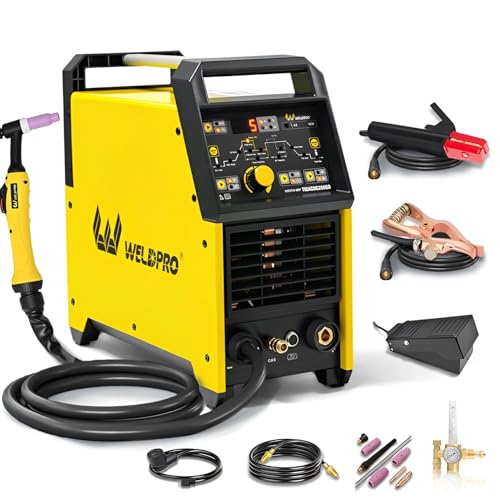

This guide is for small fabrication, repair, and custom shops choosing their first dedicated pulse TIG machine or replacing an older unit. The three picks below were chosen because their Amazon listings state a pulse TIG function directly, in the title or the listed welding modes. They span an AC/DC machine with a foot pedal, a light DC-only pulse unit, and a multi-process model that adds MIG work.
Quick Picks
As an Amazon Associate we earn from qualifying purchases
| Product | Best for | Key spec |
|---|---|---|
| Weldpro 200A AC/DC TIG Welder with Pulse | Shops welding aluminum and steel with one machine | AC and DC pulse TIG with 0.5-200 Hz pulse frequency |
| YESWELDER 205A TIG Welder with Pulse | Thin steel and stainless work in a portable setup | DC pulse TIG in a 10.7 lb dual voltage body |
| Weldpro Omni210 200A Multi-Process Welder | Shops that split time between MIG and TIG jobs | AC/DC HF TIG with pulse alongside synergic MIG |
How to Choose
Pulse Controls and Frequency Range
Pulse TIG switches the arc between a peak current and a lower background current, which limits how much heat soaks into thin sheet and tubing. Look for a stated pulse frequency range on the listing rather than a vague pulse claim. The Weldpro 200A lists 0.5-200 Hz, so you can run a slow pulse that helps time filler rod dabs on thin stainless, or a fast pulse that tightens the arc on edges and corners. Also check whether peak current, background current, and pulse width are adjustable separately, because fixed pulse programs give you far less control over heat input.
AC or DC Output for Aluminum and Steel
Current type decides which metals the machine can handle at all. Aluminum needs AC TIG, because the alternating current breaks up the oxide layer that forms on the surface; a DC-only machine cannot do that job properly, and the YESWELDER listing is honest about that limit. Steel, stainless steel, and most repair work run well on DC. If your shop takes walk-in aluminum work, such as brackets, tanks, or marine parts, an AC/DC model like the Weldpro 200A or the Omni210 belongs on your shortlist. If your tickets are nearly all steel, a DC-only pulse machine is simpler and lighter.
Amperage Output and Duty Cycle
Match the output range to the thickness you weld most weeks, not the thickest job you can imagine. A 200A class machine covers thin sheet through moderately thick plate for typical small shop work, and pulse control matters more than raw amperage on the thin end of that range. Then read the duty cycle rating on the listing: it tells you how long the machine can keep welding within a standard test cycle at a given amperage before it needs to cool. A machine rated generously at your everyday amperage will finish long seams without thermal shutdowns interrupting the job.
Power Input and Shop Wiring
Check what the machine draws before you check anything else on the panel. Dual voltage models that run on 110V or 220V input, like all three picks here, let you weld near a standard outlet for light work and move to a higher voltage circuit when you need full output. Confirm the plug type and the circuit capacity in your shop, because full amperage on TIG usually assumes the higher voltage input. Also confirm whether the listing includes an adapter plug for the lower voltage side, or whether that is a separate purchase you need to plan for.
The 3 Best Options
Weldpro 200A AC/DC TIG Welder with Pulse
This is the pick for a small shop that wants one dedicated TIG machine covering both aluminum and steel tickets. The listing states five welding modes, including AC pulse TIG and DC pulse TIG, with a 0.5-200 Hz pulse frequency range and adjustable AC balance and AC frequency for aluminum work. The package includes a TIG torch and a rocker style foot pedal, so hands-free current control is available from the first day rather than as a later add-on. At a stated 61.8 lb it is a bench or cart machine rather than a carry-around unit, which suits a fixed welding station.
Specs
- Processes: AC TIG, DC TIG, AC pulse TIG, DC pulse TIG, and stick welding
- Maximum output: 200A
- Input: 110V/220V dual voltage
- Pulse frequency: 0.5-200 Hz
- Arc start: high-frequency start
- Trigger modes: 2T and 4T
- Included: TIG torch, foot pedal, ground clamp, stick holder, gas hose, and flow meter
Best for: Shops that weld aluminum and stainless regularly and want pedal control at a fixed station.
Watch out for: The listing does not state a separate lower output figure for 110V input, so confirm the 110V rating before planning heavy work on a standard outlet.
ASIN: B0FQX7TJNX
YESWELDER 205A TIG Welder with Pulse
Choose this machine when your work is steel and stainless and the welder needs to move around the shop or out to a job. The listing names stick, DC TIG, and pulse TIG as its three processes, with independent adjustment of pulse frequency, pulse duty, and current, the control set that helps on thin sheet and tubing. High-frequency non-touch starting keeps tungsten contamination down on detailed work. At a stated 10.7 lb it is easy to carry between benches, and the auto-sensing dual voltage input switches between 110V and 220V without a manual selector. The firm limit is material: this is a DC-only machine.
Specs
- Processes: stick, DC TIG, and pulse TIG, 3 in 1
- Model: TIG-205P
- Current type: DC only
- Input: 110V/220V dual voltage, auto-sensing
- Arc start: high-frequency non-touch start
- Pulse controls: adjustable pulse frequency, duty, and current
- Weight: 10.7 lb
- Foot pedal: 5-pin interface provided, pedal not included
Best for: Thin steel and stainless fabrication where portability and pulse control matter more than aluminum capability.
Watch out for: The listing states this model cannot weld aluminum, so do not buy it if aluminum jobs are part of your workload.
ASIN: B0BVYHBQZ6
Weldpro Omni210 200A Multi-Process Welder
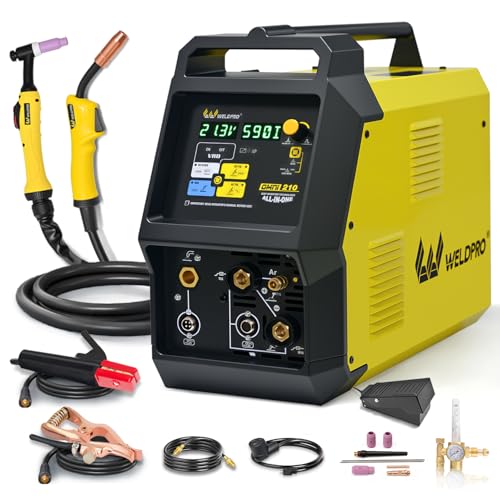
This model suits a small shop that splits its week between MIG production work and TIG jobs that still need pulse control. Its listing describes a 6-in-1 machine with synergic MIG, flux core, stick, and spool gun capability alongside AC/DC high-frequency TIG with pulse, so the TIG side is not limited to DC work on steel. That combination means one power source can run a wire job in the morning and an aluminum TIG repair after lunch. The listing includes a standard TIG torch and a VRD function, and the frequency control on the TIG side supports the heat management that pulse welding is bought for.
Specs
- Processes: synergic MIG, flux core, stick, spool gun, and AC/DC HF TIG with pulse, 6 in 1
- Maximum output: 200A
- Input: 110V/220V dual voltage
- TIG start: high-frequency start
- Safety feature: VRD function listed
- Included: standard TIG torch
Best for: Shops that want MIG speed for production work and AC/DC pulse TIG in the same power source.
Watch out for: As a multi-process machine, confirm the listing’s TIG accessory contents before ordering, since MIG-focused packages sometimes treat TIG extras as separate items.
ASIN: B0FQWLYFP8
Which One Fits Your Situation
You Weld Aluminum Parts Every Week
Pick the Weldpro 200A AC/DC TIG Welder with Pulse. AC output is the non-negotiable requirement for aluminum, and this machine pairs it with AC pulse, adjustable AC balance and frequency, and an included foot pedal for modulating current on castings and thin sections. The YESWELDER cannot weld aluminum at all, and the Omni210 spreads its design across MIG work, so the dedicated Weldpro is the cleaner fit for a TIG-first aluminum workload.
Your Work Is Thin Steel and Stainless
Pick the YESWELDER 205A TIG Welder with Pulse. Independent control of pulse frequency, duty, and current is the feature set that limits warping and burn-through on thin sheet, exhaust tubing, and stainless fittings. Its light body and auto-sensing dual voltage input also help if the machine moves between benches or travels to installation work, where a heavier AC/DC unit would mostly sit unused on the features you paid for.
You Run MIG Jobs Most Days and TIG Occasionally
Pick the Weldpro Omni210. A shop earning most of its hours on MIG and flux core work gets more value from one multi-process power source than from a dedicated TIG unit that sits idle. The Omni210 still lists AC/DC high-frequency TIG with pulse, so aluminum and stainless TIG jobs stay in-house instead of being turned away, and the synergic MIG settings shorten setup time for newer staff on routine production work.
You Are Setting Up a First Dedicated TIG Station
Start with the Weldpro 200A if the budget allows one machine that will not need replacing as your job mix grows. It covers AC and DC pulse TIG, includes the torch and foot pedal in the listed package, and runs on either shop voltage. Add the YESWELDER later as a portable second unit for steel work if job volume justifies it, rather than buying the DC-only machine first and hitting its aluminum limit within months.
Common Mistakes
- Buying a DC-only pulse TIG welder when aluminum work is already part of the shop’s job mix, then discovering the machine cannot run AC TIG at all.
- Treating the headline amperage as available on any outlet, when full output on dual voltage machines generally assumes the 220V input side.
- Ignoring the pulse frequency range and adjustment depth on the listing, and ending up with a fixed pulse program that gives little control on thin material.
- Forgetting the running costs around the machine itself, such as shielding gas, tungsten electrodes, filler rod, and a regulator, when setting the purchase budget.
- Assuming a foot pedal is included because the machine supports one; some listings provide only the pedal interface and sell the pedal separately.
Frequently Asked Questions
Does pulse TIG really help on thin metal?
Yes, within the limits of the material and your settings. Pulsing alternates the arc between peak and background current, which lowers average heat input while keeping enough peak current to maintain the puddle. On thin stainless sheet or tubing that means less warping, less discoloration, and a lower chance of burning through at edges, provided travel speed and filler use are also under control.
Can a DC-only pulse TIG welder weld aluminum?
No. Aluminum TIG welding needs AC output so the arc can clean the oxide layer from the surface as you weld. A DC-only machine such as the YESWELDER 205A is limited to steel, stainless steel, and other DC-suitable metals. If aluminum appears in your job mix even occasionally, choose an AC/DC model such as the Weldpro 200A or the Omni210 instead of planning around the limitation.
What power supply does a small shop need for a 200A pulse TIG welder?
Most 200A class machines in this guide accept dual voltage 110V/220V input, which lets you run lighter work from a standard outlet and reserve the higher voltage circuit for full output welding. Check the listing for the plug type and the input requirements, and confirm your shop circuit can supply the machine at the amperage you actually plan to weld at most days.
Is a foot pedal necessary for pulse TIG work?
A pedal is not required, since panel controls and 2T or 4T torch trigger modes can start, hold, and end the weld, and pulse settings are adjusted on the machine either way. A pedal does add live current control during the weld, which helps on parts with changing thickness. Note the difference between listings: the Weldpro 200A includes a pedal, while the YESWELDER provides the interface only.
More from Amazon
Programs that pair well with the guide above. Offers and eligibility are set by Amazon and may change.
Free shipping on eligible items, Prime Video and more. Eligible new members can start with a free trial.
Start a Prime free trialAd-free music streaming. Eligible new subscribers can start with a free trial.
Try Music Unlimited freeA Prime membership for ages 18-24 with a trial period. Eligibility is set by Amazon.
See Prime for Young AdultsAudiobooks and podcasts to listen to on the go. Eligible new members can start with a free trial.
Try Audible freeAs an Amazon Associate we earn from qualifying purchases.


Write Your Review
No reviews yet. Be the first to share your experience!