

Key takeaways
- Four inverter plasma cutters for equipment repair shops, compared on clean-cut capacity, pilot arc start type, dual-voltage input and air needs.
Repair work rarely hands you clean, new plate. It hands you a rusted mower deck, a painted trailer fender, a cracked bracket on a loader, and expanded-metal guards that need trimming to fit. The buying decision that matters is whether an inverter plasma cutter starts reliably on that dirty, coated metal, holds its rated cut at the voltage your shop actually has, and keeps consumables cheap enough to treat as supplies rather than treasures.
This shortlist is for equipment repair shops, farm and fleet maintenance benches, and small fabrication crews who cut steel, stainless, and aluminum every week. Every pick below is a dedicated inverter plasma cutter, chosen from the specifications published on its Amazon listing: output current, clean and severance cut ratings, arc start type, input voltage, and air requirements.
Quick Picks
As an Amazon Associate we earn from qualifying purchases.
| Product | Best for | Key spec from title |
|---|---|---|
| YESWELDER CUT-65DS PRO Plasma Cutter | Rusty and painted repair stock near shop electronics | 5/8 in ideal clean cut at 220V |
| bestarc BTC500DP Plasma Cutter | Grates, mesh guards, and visible air control | 1/2 in clean cut with air sensor display |
| LOTOS LT5000D Plasma Cutter | Mixed plate work split between 120V and 240V | 10–50A output, 3/4 in severance cut |
| Hobart AirForce 40i Plasma Cutter | Daily light-gauge work with brand support | 20–40A output, XT40R torch |
How to Choose
Rate the clean cut, not the headline maximum
Listings print two thickness numbers, and repair buyers routinely shop by the wrong one. The clean cut rating is the thickness the machine separates in one pass with an edge you can weld or bolt against. The severance or maximum figure is a slow, ragged parting of metal you will grind afterwards. Match the clean cut number to the plate your shop sees weekly: mower decks, frame rails, and implement brackets usually sit between 1/4 and 1/2 inch. Then treat severance as an occasional escape hatch, not a daily rating, because travel speed and edge quality fall off hard at that limit.
Choose the arc start your metal and bench demand
A pilot arc starts the plasma jet before the torch touches the work, so it fires through paint, rust, and mill scale and re-strikes across the holes in expanded metal. That is the single most useful feature for repair cutting. The split that matters next is how the pilot starts. High-frequency starts are common and effective, but they can disturb nearby electronics, which is a real concern on a bench that also runs diagnostic gear. Non-high-frequency blow-back starts avoid that interference. If your cutter will live beside scan tools, CNC controls, or a computerized balancer, weight the start type as heavily as amperage.
Confirm your voltage, breaker, and air before amperage
Every machine here is dual voltage, but the thick ratings only arrive on 220/240V input. On a 110/120V outlet the same unit turns into a thinner-cutting tool, and it may want a 30 or 40 amp breaker to run at full output without nuisance trips. Air is the other half of the purchase: these cutters need an external compressor delivering dry air at the pressure and flow the listing states, typically around 65 to 80 PSI. Wet or undersized air eats electrodes and nozzles, leaves dross welded to the cut edge, and is behind most disappointing first cuts blamed on the machine.
Price the torch family and the support behind it
A repair shop consumes tips, electrodes, and shield cups the way it consumes grinding discs, so the torch standard matters more than the box color. Machines built around widely sold torch families such as AG60, IPT40, or PT60 keep consumable sets easy to source and cheap to stock in multiples. Check what the listing includes in the box, because some ship a regulator and air hose while others leave fittings to you. Finally, weigh the stated warranty and whether the brand sells parts and consumables under its own storefront; a cutter that is down for two weeks waiting on an odd fitting earns nothing.
The 4 Best Options
YESWELDER CUT-65DS PRO Plasma Cutter

Repair benches that cut weathered steel all day will appreciate how this machine starts. Its non-high-frequency blow-back pilot arc fires without touching the work and without spraying interference into nearby electronics, which suits shops where the cutting corner shares space with diagnostic equipment. The listing rates an ideal clean cut of 5/8 inch on 220V, and a digital display reports air pressure, voltage, and current together, so a tech can spot a sagging air supply before it ruins an edge. It is the strongest fit here for painted, rusty, and perforated stock.
Specs
- Model: CUT-65DS (listing style CUT-60DS PRO)
- Input voltage: 110V/220V dual voltage
- Arc start: Non-high-frequency blow-back, non-touch pilot arc, IPT40 torch
- Ideal clean cut: 5/16 in at 110V, 5/8 in at 220V
- Maximum cut: 1/2 in at 110V, 63/64 in at 220V
- Display: Digital display showing air pressure, voltage, current, and error codes
- Dimensions: 15.75 x 5.91 x 11.81 in
- Warranty: 1 year
Best for: Shops cutting rusty, painted, or perforated equipment panels near sensitive electronics.
Watch out for: YESWELDER sells this chassis under both CUT-65DS and CUT-60DS PRO names, and the listing headline rates output at 60A, so confirm the model printed on the unit matches what you ordered.
ASIN: B09L3Y3ZLF
bestarc BTC500DP Plasma Cutter

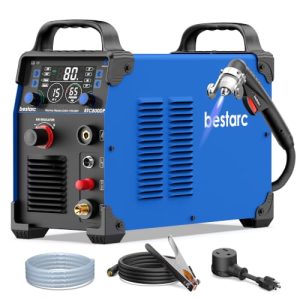
This 50 amp inverter cutter is built around feedback. A large LED display pairs with a built-in air sensor that shows real-time pressure, which takes the guesswork out of the most common cause of poor cuts in a busy shop: air that is not where the operator thinks it is. The pilot arc torch starts without contact on coated metal, and the listing’s post flow and mesh settings suit the expanded-metal guards, grates, and screens that repair work constantly trims. Dual voltage input lets the same unit run at the bench or from a lighter circuit across the yard.
Specs
- Model: BTC500DP 10GEN
- Output current: 50A
- Inverter technology: IGBT
- Input voltage: 110V/220V dual voltage
- Clean cut: 1/2 in
- Maximum cut: 4/5 in (20mm at 220V, 65 PSI)
- Arc start: Pilot arc, AG60P torch
- Air control: Built-in regulator and air sensor with LED display
- Modes: Post flow, mesh cut, 2T/4T
Best for: Repair benches cutting grates, mesh, and guards that want air pressure visible at a glance.
Watch out for: bestarc sells this model in numbered generations and several listings coexist, so check the generation named in the listing title before ordering.
ASIN: B0D7CR3YLC
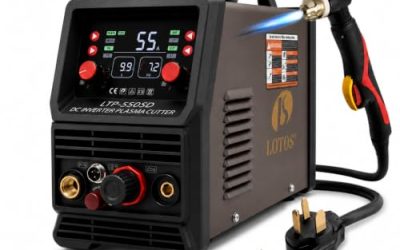
LOTOS LT5000D Plasma Cutter
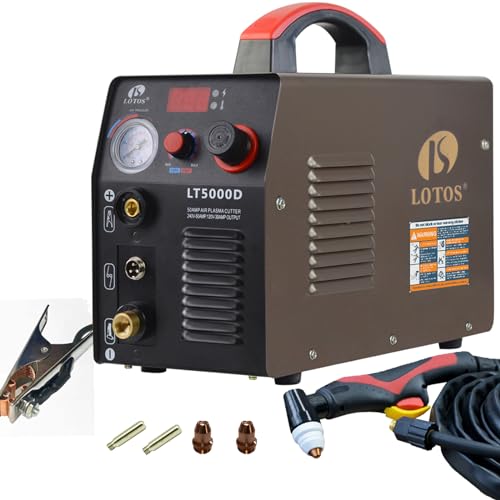
The LT5000D is the straightforward dual-voltage workhorse of this group. Its current listing rates a 5/8 inch clean cut and a 3/4 inch severance cut from a 10 to 50 amp output range, with automatic dual voltage and dual frequency input that adapts to 120V or 240V service without switches to set. A front-mounted regulator and the brand’s Papst cooling system speak to long sessions at the bench. For a shop that splits time between thin sheet at a wall outlet and heavier brackets on the 240V circuit, it covers both without a second machine.
Specs
- Model: LT5000D
- Output current: 10–50A DC
- Input voltage: Dual voltage 120V or 240V, 50/60Hz automatic
- Clean cut: 5/8 in (16mm)
- Severance cut: 3/4 in (20mm)
- Cooling: Papst advanced cooling system
- Dimensions: 15 x 6 x 11 in
Best for: Mixed repair cutting that moves between 120V convenience and 240V capacity.
Watch out for: Published sources disagree on the torch start type fitted to the current version, so confirm the start type on the listing if most of your work is painted or rusty stock.
ASIN: B004VFJL14
Hobart AirForce 40i Plasma Cutter

Not every repair shop needs 50 amps and up. The AirForce 40i is an inverter cutter from a long-established US welding brand, with a 20 to 40 amp output range, dual voltage input for 120V or 240V receptacles, and the XT40R torch. Its listed severance capacity reaches 7/8 inch, which is generous for a 40 amp class machine, and the draw for many shops is simpler: Hobart’s dealer and parts network behind a tool that cuts sheet, pans, and light brackets daily. It trades headline amperage for brand support and a lighter workload rating.
Specs
- Output current: 20–40A
- Input voltage: 120V/240V dual voltage
- Power supply: Inverter
- Torch: XT40R
- Severance cut: 7/8 in
Best for: Shops that want brand-backed support for daily light-gauge and sheet-metal repair.
Watch out for: Output tops out at 40A, so work near the severance limit will be slow, and thicker plate belongs on a higher-amp machine.
ASIN: B0828JNFG5
Which One Fits Your Situation
Your bench sits next to diagnostic electronics
Choose the YESWELDER CUT-65DS PRO. Its non-high-frequency blow-back start is the one arc system here designed to avoid interference with surrounding electrical machinery, and the pilot arc still fires through paint and rust without contact. The display’s air pressure readout is a bonus when several techs share one compressor and its air lines.
You trim grates, screens, and expanded metal weekly
Choose the bestarc BTC500DP. Its pilot arc re-strikes across perforations instead of dying at every hole, the listing includes a mesh cutting mode, and the air sensor display helps newer techs keep pressure in range. Stock AG60P consumables in quantity, because mesh work consumes them faster than straight cuts in repair service.
You split jobs between a 120V wall outlet and the 240V bay
Choose the LOTOS LT5000D. Automatic dual voltage input means the machine adapts when you move it, and the 5/8 inch clean cut rating on the current listing is the strongest in this 50 amp group. Just confirm the torch start type on the listing if your repair stock is usually coated or corroded.
You cut sheet and light brackets, and uptime support matters most
Choose the Hobart AirForce 40i. Forty amps covers floor pans, exhaust work, ducting, and brackets without drama, and Hobart’s established parts and service network is the safer bet when a down machine blocks a bay. Step up to a 50 amp or larger unit only when 3/8 inch plate becomes a weekly job.
Safety Checks
- Wear a cutting shade appropriate for plasma work, safety glasses underneath, leather gloves, and flame-resistant clothing; the arc is bright enough to injure eyes from across the bay, and sparks travel farther than most operators expect.
- Clear the cut zone of fuel cans, solvent rags, hydraulic lines, and vehicle fuel tanks before striking an arc, and keep a charged extinguisher within reach while cutting on or near equipment.
- Ventilate the area or use fume extraction, especially on galvanized, painted, or coated metal, and never cut sealed containers, drums, or tanks that held fuel or chemicals.
- Clamp the work lead to clean, bare metal close to the cut, keep cables off wet floors, and unplug the machine before changing torch consumables or opening the case.
Common Mistakes
- Shopping by the severance or maximum cut number, then discovering the everyday clean cut rating is far thinner.
- Plugging into 110V and expecting the 220V thickness ratings, or tripping breakers because the circuit is smaller than the listing requires.
- Feeding the cutter wet, undersized compressor air, which destroys consumables and leaves heavy dross on every edge.
- Ignoring arc start type, then fighting a contact-start torch on painted metal or parking a high-frequency unit beside diagnostic gear.
- Ordering the machine without spare tips and electrodes in its torch family, so a worn consumable idles the bench mid-repair.
Frequently Asked Questions
Do these plasma cutters need an air compressor?
Yes. All four machines in this roundup are air plasma cutters that need an external compressor; none of the listings includes a built-in compressor. Plan on dry, filtered air at the pressure and flow each listing states, and add a water separator if your shop air runs wet, because moisture shortens consumable life quickly.
Can a dual voltage cutter really work on a household outlet?
It can, within limits. On 110/120V input these machines reduce output and cut capacity, so the thick ratings in the listings assume 220/240V service. Check the breaker size the listing calls for as well, since a 50 amp class cutter at full tilt on a small household circuit will trip protection instead of cutting.
What is the difference between high-frequency and blow-back pilot arc?
Both start the arc without touching the metal. A high-frequency start uses an electrical spark that can interfere with nearby electronics such as CNC controls and diagnostic tools. A blow-back start moves the electrode mechanically inside the torch, producing no high-frequency noise, which is why the YESWELDER above suits benches that share space with sensitive equipment.
How long do plasma cutter consumables last in repair work?
The listings do not promise a fixed life, because it depends on amperage, air quality, and technique. Dry air at the correct pressure, starting on an edge where possible, and keeping the torch moving at a steady pace all extend tip and electrode life. Budget for consumable sets as a running supply, like grinding discs.
More from Amazon
Programs that pair well with the guide above. Offers and eligibility are set by Amazon and may change.
Free shipping on eligible items, Prime Video and more. Eligible new members can start with a free trial.
Start a Prime free trialAd-free music streaming. Eligible new subscribers can start with a free trial.
Try Music Unlimited freeA Prime membership for ages 18-24 with a trial period. Eligibility is set by Amazon.
See Prime for Young AdultsAudiobooks and podcasts to listen to on the go. Eligible new members can start with a free trial.
Try Audible freeAs an Amazon Associate we earn from qualifying purchases.
Write Your Review
No reviews yet. Be the first to share your experience!