

Key takeaways
- Find the best claw hammers for framing, demolition and DIY, from one-piece steel rip claws to light titanium framers and budget fiberglass picks.
A claw hammer is the one hand tool that earns its place in almost every toolbox. It drives nails, pulls mistakes, pries boards, and opens paint cans, and the right one feels balanced in the hand instead of fighting every swing. The wrong one leaves a sore wrist, bent nails, and a handle that loosens after a season of hard use.
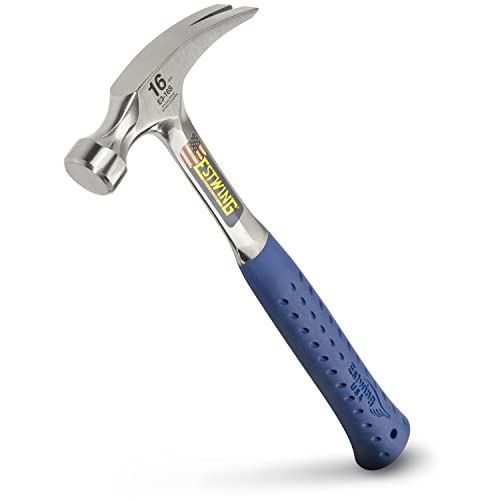

The best claw hammers share a few traits that matter more than brand badges: a forged head that stays put, a claw shape matched to the job, a face that suits the surface, and a handle that absorbs shock instead of passing it to the elbow. This guide compares five hammers for framing, demolition, and everyday DIY, from a budget fiberglass pick to a premium titanium framer, so the choice comes down to the work in front of you.
As an Amazon Associate, we earn from qualifying purchases.
Table of Contents
- Quick Answer
- 1. Estwing E3-16S Rip Claw Hammer
- 2. Estwing E3-16C Curved Claw Hammer
- 3. CRAFTSMAN CMHT51398 Fiberglass Claw Hammer
- 4. Spec Ops Tools 16 oz Rip Claw Hammer
- 5. Stiletto TB15MC Titanium Claw Hammer
- How to Choose
- Who Should Skip It
- Frequently Asked Questions
- Conclusion
- Product and ASIN Reference
Quick Answer
For most buyers, the Estwing E3-16S is the best claw hammer: a one-piece forged steel tool with a straight rip claw for demolition and a smooth face for clean nailing. Choose the curved-claw E3-16C for easier nail pulling, the CRAFTSMAN CMHT51398 for a budget fiberglass handle, and the Stiletto TB15MC if a light titanium framer is worth the premium tier.
1. Estwing E3-16S Rip Claw Hammer
The Estwing E3-16S is the benchmark that other claw hammers get measured against, and it earns that spot with a simple idea: head and handle forged from a single piece of American steel, with no joint that can loosen, crack, or separate over time. The 16 oz head is the versatile middle weight for household work, light framing, and demolition, heavy enough to drive common nails in a few solid swings without wearing out the arm on a long afternoon. A smooth face keeps the striking surface from chewing up wood around the nail, which matters when the work stays visible.
The straight rip claw is what sets this model apart from its curved-claw twin. A rip claw runs straighter and splits boards more readily, so it suits demolition, pulling apart nailed assemblies, and prying trim and decking. The claw also works for pulling nails, though it gives up some leverage to a curved claw when a nail sits deep or the head is buried. The shock reduction grip is a molded vinyl sleeve over the steel handle, and it takes the edge off vibration better than bare steel while staying slim enough for a firm hold.
Balance is the quiet strength here. The one-piece build puts the weight where the swing wants it, and the 13-inch overall length gives enough leverage for framing nails without feeling unwieldy in tight spots. Because the handle is steel, the hammer can take overstrikes and hard prying that would split a wood handle, and the forged head resists chipping at the rim.
There are trade-offs to weigh. Steel transmits more shock to the hand than fiberglass or wood, so a full day of framing can leave the elbow complaining even with the grip. The 16 oz head is light for heavy framing, where a 20 oz or larger hammer drives big nails with fewer swings, and the straight claw is less handy than a curved claw for the steady nail pulling that fills a remodel. None of that changes the core case: this is a durable, well-balanced rip claw hammer that covers the widest range of jobs in this guide.
Specs
- Head weight: 16 oz
- Claw type: Straight rip claw
- Face: Smooth
- Head material: Alloy steel
- Handle material: Alloy steel, one-piece forged construction
- Grip: Shock reduction vinyl grip
- Overall length: 13 inches
- Item weight: 1 pound
- Made in: USA
2. Estwing E3-16C Curved Claw Hammer
The Estwing E3-16C shares the same one-piece forged steel build as the E3-16S, and it differs in the one place that changes daily use: the claw curves. That curve adds leverage when pulling nails, so a buried nail comes out with less force and less strain on the wrist, and it pries boards with a steadier fulcrum. For remodel work, repairs, and general DIY, where pulling old nails is half the job, the curved claw is the more useful shape, and it is the reason this model is the classic household pick.
Everything else about the build matches its rip-claw sibling. The 16 oz head drives common nails cleanly, the smooth face avoids marking wood around the strike, and the shock reduction grip damps vibration from the steel handle. The overall length is 13 inches, the total weight is about a pound, and the forged construction means there is no head-to-handle joint to work loose. The hammer feels nearly identical in the hand, which makes the choice between the two Estwings a simple question of claw shape rather than quality or balance.
The curved claw earns its keep in specific moments. Pulling finish nails from trim, removing deck boards without splitting them, and levering up nailed flooring all go easier with the curve, because the claw rocks against the surface and multiplies force at the nail. It also doubles as a handy pry tool for small jobs, though it is not a substitute for a real pry bar on heavy demolition.
The limits mirror the E3-16S with one extra note. The curved claw splits boards less readily than a straight rip claw, so demolition that involves tearing nailed lumber apart goes slower. Steel still passes more vibration to the arm than fiberglass, and the 16 oz head is not the fastest choice for heavy framing. Buyers who mostly build new framing should look at the rip claw or the Stiletto below, while buyers who mostly repair, remodel, and pull old fasteners will get more from the curve.
Specs
- Head weight: 16 oz
- Claw type: Curved claw
- Face: Smooth
- Head material: Alloy Steel
- Handle material: Alloy Steel, one-piece forged construction
- Grip: Shock Reduction grip
- Overall length: 13 inches
- Item weight: 1 pound
- Made in: USA
3. CRAFTSMAN CMHT51398 Fiberglass Claw Hammer

The CRAFTSMAN CMHT51398 is the budget pick that still behaves like a proper tool, and its fiberglass handle is the reason. Fiberglass absorbs vibration better than bare steel and weighs less, so the hammer feels lively in the hand during longer sessions of nailing and pulling. The 16 oz forged steel head matches the Estwing models for driving power, while the rubberized grip keeps the handle secure even when hands get dusty or damp. For a first toolbox or a second hammer kept in the car or garage, it covers the basics at the lowest tier in this guide.
The curved claw suits the same repair and remodel work as the Estwing E3-16C, giving solid leverage for pulling nails and prying trim. A smooth face keeps strikes clean on visible wood, and the head carries a rim temper that resists chipping and spalling at the edges. CRAFTSMAN adds an overstrike guard where the head meets the handle, the spot where fiberglass handles usually fail after repeated missed strikes. The balance is head-forward enough to drive nails without extra effort, yet the total weight stays light enough for overhead work.
Where this hammer gives ground is longevity under hard use. A fiberglass handle cannot be repaired once it cracks, and while the overstrike guard helps, a handle that takes a hard side load can still fail where a one-piece steel hammer would shrug it off. The head is attached rather than forged with the handle, so after years of heavy prying it can loosen. None of that matters much for household DIY, where the hammer lives in a drawer between projects, but a framer swinging all day will notice the difference in durability and feel.
For the buyer who needs a capable claw hammer without paying the mid-range tier, this is the sensible pick. It drives and pulls well, and it is comfortable for long sessions. Check the listing for the 16 oz size before ordering, since the same model line comes in other weights, and keep a pry bar nearby for stubborn demolition instead of levering hard on the fiberglass handle.
Specs
- Head weight: 16 oz
- Claw type: Curved claw
- Face: Smooth
- Head material: Forged steel
- Handle material: Fiberglass with overstrike protection
- Grip: Rubberized grip
- Item model number: CMHT51398
4. Spec Ops Tools 16 oz Rip Claw Hammer
The Spec Ops Tools 16 oz rip claw hammer is the comfort-first pick in this group, built around a shock-absorbing grip and a straightforward rip claw layout. The carbon steel head and alloy steel handle give it the same solid striking feel as the Estwing models, while the grip is thicker and softer, which suits buyers whose hands tire quickly or who swing for hours at a stretch. A smooth face keeps the work clean, and the rip claw handles demolition and prying with the same straight leverage as the E3-16S.
What stands out in daily use is how little vibration reaches the hand. The grip cushions the shock of each strike, and the balance keeps the 16 oz head moving smoothly through the swing. That makes it a good match for framing, deck work, and demolition, where the hammer spends the day driving nails and splitting nailed boards. The head is forged rather than cast, so the face holds up to repeated strikes, and the rip claw is slim enough to slip under trim and siding without tearing the surrounding wood.
Spec Ops also ties the hammer to a veterans cause, with a share of proceeds supporting veterans programs. The brand is newer to the hammer market than Estwing or CRAFTSMAN, so it carries less long-term track record, though the construction follows the same proven pattern of a steel head on a steel handle. Buyers who want the softest grip in this guide will find it here.
The trade-offs are modest. The alloy steel handle transmits more vibration than fiberglass, even with the cushioned grip, and the 16 oz head is still light for the heaviest framing. The rip claw pulls nails with less leverage than a curved claw, so remodel work that involves many buried nails goes easier with the E3-16C or the CRAFTSMAN. For framing and demolition with a comfortable grip, though, this is the easiest hammer on the hands in the group.
Specs
- Head weight: 16 oz
- Claw type: Rip claw
- Face: Smooth
- Head material: Carbon Steel
- Handle material: Alloy Steel
- Grip: Shock-absorbing grip
5. Stiletto TB15MC Titanium Claw Hammer
The Stiletto TB15MC is the premium pick, and its case rests on one material: titanium. The 15 oz titanium head strikes with the force of a heavier steel head while weighing far less, so a framer can swing all day with less fatigue and still drive big nails in fewer blows. The handle is titanium too, with a rubber grip, and the overall build is aimed squarely at professionals who frame, remodel, and demolish for a living. If the budget allows the premium tier, this is the hammer that changes how a long day feels.
The working details are all geared toward framing speed. A milled face grips nail heads instead of glancing off, which matters when driving nails at an angle or overhead, and a magnetic nail starter holds a nail in place for one-handed starts. The straight claw fits the framing pattern, and a side nail puller built into the head pulls nails up to 16D size without flipping the hammer around. The curved handle is 18 inches long, giving extra leverage on the swing and on prying.
Titanium also changes the feel of a missed strike. The material absorbs shock differently than steel, so the sting that travels up a steel handle is muted, and the lighter head means the arm does less work on every swing. That combination is why framers who switch to titanium rarely go back, even though the hammer costs several times the budget pick. The head is a single titanium forging, and the nail puller and starter are integrated rather than bolted on.
The downsides are real and worth stating plainly. A milled face can leave marks on finish surfaces, so this is not the hammer for trim or visible woodwork, where a smooth face is the right call. The premium tier puts it out of reach for a casual toolbox, and replacement parts and service are more specialized than for a common steel hammer. The 18-inch handle can also feel unwieldy in tight spaces. For professional framing and heavy demolition, though, the weight savings and striking power make it the strongest performer in this guide.
Specs
- Head weight: 15 oz
- Claw type: Straight claw
- Face: Milled
- Head material: Titanium
- Handle material: Titanium with rubber grip
- Handle length: 18 inches
- Features: Magnetic nail starter, 180-degree side nail puller
- Fits nails: 8D through 16D
How to Choose
Head weight decides how fast nails go in and how tired the arm gets. A 16 oz head is the versatile middle ground for household work, light framing, and demolition, while a heavier 20 oz or larger head drives big framing nails with fewer swings at the cost of fatigue. A light titanium head like the Stiletto breaks this trade-off by striking harder than its weight suggests, which is why it suits professionals who swing all day.
Claw shape is the next decision. A curved claw gives more leverage for pulling nails and prying boards gently, which fits remodel and repair work. A straight rip claw splits boards and pries nailed assemblies apart more readily, which fits demolition and framing. Neither shape is wrong on its own, so match the claw to the job that fills most of the hammer time.
Face type follows the surface. A smooth face leaves clean wood and suits finish work, trim, and visible nailing. A milled face grips nail heads and prevents glancing blows, which suits framing and rough work, but it can mark the surface, so keep it away from finished wood. Handle material is the third choice: one-piece steel is the most durable and survives overstrikes, fiberglass absorbs vibration and stays light, and wood absorbs shock well but can split under hard prying.
Grip and length round out the choice. A cushioned or shock-reducing grip matters on long days, and a longer handle adds leverage for framing while a shorter handle fits tight spaces. Before ordering, confirm the head weight, claw type, and face type on the listing, since the same model line often comes in several sizes.
Who Should Skip It
A claw hammer is not the right tool for every striking job. Heavy demolition that calls for breaking concrete or driving stakes belongs to a sledgehammer, and soft blows that must not mark a surface belong to a mallet. A ball-peen hammer suits metalwork, and a roofing hammer suits shingle work, so none of those jobs should be forced onto a claw hammer.
Buyers who only hang pictures and assemble flat-pack furniture may find even a 16 oz hammer heavier than needed, and a lighter tack or trim hammer could serve them better. The same applies to fine finish work, where a smooth-face hammer in a lighter weight protects delicate trim. If the work is mostly framing, the budget fiberglass pick may not last, and the premium titanium model may be more hammer than a weekend project needs.
Frequently Asked Questions
What size claw hammer is best for general DIY?
A 16 oz head is the best all-around size for general DIY, because it drives common nails cleanly without tiring the arm. Lighter hammers suit picture hanging and trim, while heavier hammers suit framing.
Should I choose a curved claw or a straight rip claw?
Choose a curved claw for remodel and repair work, where pulling nails and prying boards gently matters most. Choose a straight rip claw for framing and demolition, where splitting boards and tearing nailed assemblies apart matters more.
What is the difference between a smooth face and a milled face?
A smooth face leaves a clean surface and suits finish work, trim, and visible nailing. A milled face has a textured pattern that grips nail heads and prevents the hammer from glancing off, which suits framing and rough work. Milled faces can mark wood, so keep them away from finished surfaces.
Do fiberglass handles last as long as steel handles?
A fiberglass handle lasts well for household use and absorbs vibration better than steel, but it cannot be repaired once it cracks, and it can fail under hard side loads. A one-piece steel handle survives overstrikes and heavy prying better, which is why it suits framing and demolition.
Conclusion
The best claw hammer is the one that matches the work in front of you. The Estwing E3-16S is the best all-around pick for framing, demolition, and DIY, with a one-piece steel build and a straight rip claw that handles the hardest jobs. The E3-16C trades the rip claw for a curved claw that pulls nails with less effort, making it the better choice for remodel and repair work.
The CRAFTSMAN CMHT51398 brings the same 16 oz capability to the budget tier with a comfortable fiberglass handle, while the Spec Ops rip claw adds the softest grip in the group for long days. The Stiletto TB15MC sits at the premium tier, and its titanium head and long curved handle make it the strongest choice for professional framing. Pick the head weight, claw shape, and handle that fit the job, and the hammer will serve for years.
Product and ASIN Reference
| Product | ASIN |
|---|---|
| Estwing E3-16S Rip Claw Hammer | B0000224VG |
| Estwing E3-16C Curved Claw Hammer | B00002N5NA |
| CRAFTSMAN CMHT51398 Fiberglass Claw Hammer | B07RRNSFY4 |
| Spec Ops Tools 16 oz Rip Claw Hammer | B0CRXZ86L5 |
| Stiletto TB15MC Titanium Claw Hammer | B00079R1YM |
More from Amazon
Programs that pair well with the guide above. Offers and eligibility are set by Amazon and may change.
Free shipping on eligible items, Prime Video and more. Eligible new members can start with a free trial.
Start a Prime free trialAd-free music streaming. Eligible new subscribers can start with a free trial.
Try Music Unlimited freeA Prime membership for ages 18-24 with a trial period. Eligibility is set by Amazon.
See Prime for Young AdultsAudiobooks and podcasts to listen to on the go. Eligible new members can start with a free trial.
Try Audible freeAs an Amazon Associate we earn from qualifying purchases.

Write Your Review
No reviews yet. Be the first to share your experience!