

Key takeaways
- Find the best dual voltage MIG welders with digital displays for home and shop use — compare 200A, 175A and 165A models, displays, duty cycle and setup.
A dual voltage MIG welder with a digital display solves two common frustrations at once. It plugs into the power you actually have: a standard 110-volt household outlet for light work, and a 220-volt outlet when you need more output for thicker steel. And its digital display shows the numbers you are welding with — voltage and current — instead of leaving you to guess from the position of a dial. That matters because MIG welding is a settings-driven process. The same machine can lay down a clean bead or a spattery mess depending on whether the voltage matches the wire speed and the thickness of the metal, and a readable display makes it far easier to return to a setting that worked last time.

Disclosure: As an Amazon Associate, we earn from qualifying purchases made through links on this page, at no extra cost to you.
Quick Picks
| Welder | Best for | Max output | Input voltage | Display |
|---|---|---|---|---|
| YESWELDER MIG-205DS PRO | Most versatile multi-process machine | 200A | 110V / 220V | Digital display, real-time current monitoring |
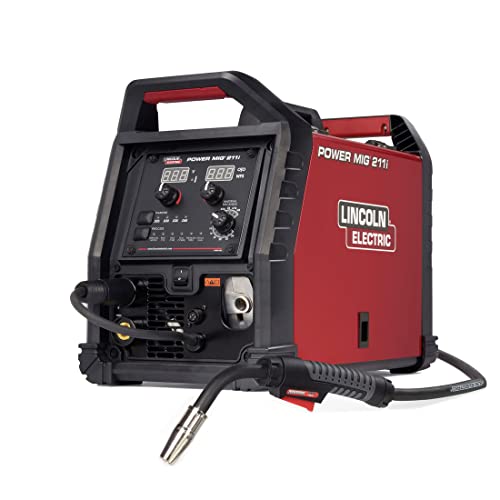
| Lincoln Electric Power MIG 211i | Brand-name quality and easy setup | 175A at 30% duty cycle | 120V / 230V auto-sensing | Seven-segment digital display |
| bestarc 165A MIG Welder | Light, affordable portability | 165A | 110V / 220V | Digital LED screen, voltage and current |
A note on verification: each Amazon product page below was opened directly on 25 November 2026 and returned an access error (HTTP 403), so the listings could not be confirmed live on the product page itself. The model names, specifications and ASINs below come from a search-listing roundup that links to those Amazon listings. That is weaker evidence than a live product-page check, so please confirm the model, the price and the stock status on Amazon before ordering.
YESWELDER MIG-205DS PRO MIG Welder, 200Amp 110/220V Dual Voltage
- ASIN: B07TVCWDGW — View on Amazon
- Verification status: UNABLE TO VERIFY — the direct Amazon product page returned HTTP 403 when opened on 25 November 2026, so this listing is supported only by search-listing evidence and needs a live-browser price and stock check before publishing or buying.
- Max output: 200 amps
- Input voltage: 110V / 220V dual voltage
- Display: Digital display with real-time current monitoring
- Processes: Gas MIG, flux core MIG, spool gun aluminium MIG, Lift TIG and Stick
- Wire feed speed: 58 to 858 inches per minute
The YESWELDER MIG-205DS PRO is the most capable machine in this roundup, pairing the highest output here with the widest range of welding processes. A 200-amp maximum output gives it the headroom to handle thicker material than the other two picks, while the five-in-one design covers gas MIG, flux core MIG, aluminium MIG with a spool gun, Lift TIG and Stick welding from a single unit. For a buyer who wants one machine for car bodywork, general fabrication and repair work on different metals, that breadth is the main attraction.
The digital display shows the welding current in real time, so you can see what the machine is doing while you weld rather than relying on memory or a knob position. That matters most when you switch between materials or thicknesses, because a setting that worked on thin sheet metal will not be right for a thicker bracket. The display also supports synergic MIG mode, in which the machine adjusts the wire feed to match the voltage setting. Beginners can lean on that automatic matching for a workable starting point, while experienced welders can switch to manual mode and fine-tune the settings themselves.
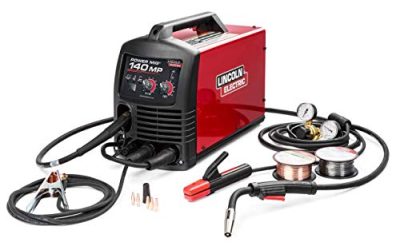
Lincoln Electric Power MIG 211i MIG Welder 120/230V
- ASIN: B0BJ2PYHN9 — View on Amazon
- Verification status: UNABLE TO VERIFY — the direct Amazon product page returned HTTP 403 when opened on 25 November 2026, so this listing is supported only by search-listing evidence and needs a live-browser price and stock check before publishing or buying.
- Max output: Up to 175 amps with a 30% duty cycle
- Input voltage: 120V / 230V dual voltage with auto-sensing input
- Display: Seven-segment digital display with easy-turn knobs for voltage and wire speed
- Processes: Gas MIG, flux core MIG, spool gun aluminium MIG, Lift TIG and Stick
- Materials: Steel, stainless steel and aluminium up to 3/8 inch thick
- Wire compatibility: 0.025 to 0.045 inch diameter wire
The Lincoln Electric Power MIG 211i is the brand-name pick in this guide. Lincoln Electric is one of the most established names in welding, and this machine is built around simple, readable controls rather than a complicated menu system. Its seven-segment digital display shows the settings clearly, and the voltage and wire speed are adjusted with easy-turn knobs. That combination suits buyers who want the reassurance of a digital readout without navigating a multi-level digital menu every time they change a setting.
The dual voltage input is auto-sensing: the machine detects whether it is plugged into a 120V or a 230V supply and adjusts accordingly. That removes one real source of error with dual voltage machines — forgetting to flip a voltage selector switch. You can move the machine from a household outlet in the garage to a 230V outlet in the shop without changing anything on the machine itself. The rated output is up to 175 amps at a 30% duty cycle, and the listed welding range covers steel, stainless steel and aluminium up to 3/8 inch thick, a solid range for home fabrication, automotive repair and light structural work.
The trade-offs are the ones you would expect from a brand-name machine. The price is higher than the budget picks in this guide, so it makes the most sense for buyers who plan to weld regularly and value the brand, the build and the support behind it. The duty cycle is also a limit: 30% at 175 amps means the machine needs cooling time during heavy, continuous welding, so it is not a production machine for all-day high-amperage work. For most home and small-shop use, with natural pauses to reposition work and inspect beads, that is workable. Choose the Lincoln 211i if you want a trusted brand, simple digital controls, and a machine that moves easily between household and shop power. Skip it if your budget is tight, or if you need a higher duty cycle for long, continuous welds at full output.
bestarc 165A MIG Welder, 110V/220V Dual Voltage Gas/Gasless

- ASIN: B0DMCLD4N5 — View on Amazon
- Verification status: UNABLE TO VERIFY — the direct Amazon product page returned HTTP 403 when opened on 25 November 2026, so this listing is supported only by search-listing evidence and needs a live-browser price and stock check before publishing or buying.
- Max output: 165 amps
- Input voltage: 110V / 220V dual voltage with automatic voltage detection
- Display: Digital LED screen showing voltage, current and parameters
- Processes: Gas MIG, gasless flux core MIG, Lift TIG and Stick
- Weight: 13.7 pounds
The bestarc 165A is the lightest machine in this guide, weighing just 13.7 pounds. That is light enough to carry with the included shoulder strap, which changes how you use a welder: instead of bringing every job to the machine, you can bring the machine to the job, whether that is a repair on a fence, a trailer, a gate or a piece of equipment in the yard. For mobile repairs and for anyone without a dedicated welding bay, that portability is worth more than extra amperage they would rarely use.
Its digital LED screen shows voltage and current in real time, and the display is described as bright and easy to read, even through a welding helmet. That readability is the whole point of a digital display on a budget machine: it removes the guesswork from dialling in a setting, and it lets you return to a known setting for a repeat job. The synergic control automatically matches the wire feed speed to the recommended voltage, which is a genuine help for beginners, while manual adjustment is still available for welders who want to fine-tune the result.
The limits are honest ones. The maximum output of 165 amps is the lowest in this guide, so this machine is not the right choice for thick plate or for long welds on heavy material. The accessories in the box are described as basic, so a buyer who wants a full setup may need to add consumables and extras separately. The digital display can also be bright in dark conditions, a minor annoyance rather than a functional problem. Choose the bestarc 165A if you want the lightest machine here, you mostly weld thin to medium material, and you value portability and a clear digital display over maximum power. Skip it if you regularly weld thick steel or need a higher duty cycle for long sessions.
How to Choose a Dual Voltage MIG Welder With a Digital Display
Start with the power you have, because that decides how much of the machine you can actually use. On a standard household outlet, usually 110V or 120V, the output is limited, and the machine is best for thin material: sheet metal, auto body panels, light brackets and repairs. On 220V power, the same machine delivers its full output and can handle thicker steel. Before buying, check what outlets you have in your garage or shop, and whether you can add a 220V circuit if you do not already have one. A machine that only reaches its headline amperage on 220V is still a good buy if you have that outlet, but a disappointing one if you do not.
Next, look at what the digital display actually shows, because not all digital displays are equal. The most useful displays show voltage and current in real time, so you can see the numbers change as you adjust the controls and while you weld. A seven-segment display, like the one on the Lincoln 211i, shows the numbers clearly with simple knobs and no menus. A full LED screen, like the ones on the YESWELDER and bestarc models, can show more information at a glance, including the welding mode and the parameters you have selected. Either type is fine; what matters is that the numbers are readable in your working conditions, including through a welding helmet and in bright or dim light.
Amperage and duty cycle are the two numbers that describe how much welding a machine can do. Maximum amperage sets the thickest material the machine can weld in a single pass, while the duty cycle describes how long it can weld at a given output before it needs to cool down. A 30% duty cycle at 175 amps, for example, means the machine can weld for three minutes out of every ten at that output. That sounds restrictive, but most home welding involves short beads with pauses to reposition the work, so a 30% duty cycle is workable for many buyers. If you plan long, continuous welds on thick material, look for a higher duty cycle or a machine with a higher rated output so that you are welding well below its maximum.
Synergic control is worth understanding before you buy, because it changes how easy the machine is to learn on. In synergic mode, you set one value, usually the material thickness or the voltage, and the machine picks a matching wire feed speed for you. That gives a beginner a reliable starting point and reduces the trial and error that puts many new welders off. In manual mode, you control voltage and wire speed separately, which gives an experienced welder more control over the bead. The machines in this guide all offer synergic control alongside manual adjustment, so you can start with the automatic settings and move to manual control as your skill grows.
Frequently Asked Questions
What does dual voltage mean on a MIG welder?
Dual voltage means the welder can run on two different input voltages, normally a standard household supply of 110V or 120V and a higher supply of 220V or 230V. On the lower voltage, the machine produces less output and is best for thin material. On the higher voltage, it produces its full rated output and can weld thicker material. Some machines detect the input voltage automatically, so confirm the plug and outlet requirements for your workshop before buying, and never adapt a plug to fit an outlet it was not designed for.
Is a digital display worth it on a MIG welder?
For most buyers, yes, because it makes the machine easier to set up and easier to repeat. A digital display shows the voltage and current as numbers, so you can record the settings that produced a good weld and return to them next time instead of guessing from a knob position. That is especially helpful when you switch between material thicknesses or between gas and flux core wire. A display does not make bad technique good, and it does not replace practice, but it removes one source of uncertainty and shortens the learning curve for beginners.
Can I run a dual voltage MIG welder on a normal household outlet?
Yes, for light work. A dual voltage machine will run on a standard 110V or 120V household outlet, but its output is limited on that supply, so it is best suited to thin sheet metal, auto body panels and light repairs. For thicker material or longer welds, you will need the 220V or 230V supply to reach the machine’s full output. Check the listing for the recommended circuit size on each voltage, and avoid running the welder on a long, thin extension lead, which can cause a voltage drop and an unstable arc.
What thickness of steel can these welders handle?
It depends on the machine and the input voltage. The machines in this guide range from 165 amps to 200 amps of maximum output, and the Lincoln 211i is listed for steel, stainless steel and aluminium up to 3/8 inch thick. As a general guide, a 165-amp machine handles light to medium steel well, while a 200-amp machine on 220V power has more headroom for thicker material. The exact thickness also depends on the joint type, the wire size, the shielding gas and your technique, so treat the manufacturer’s thickness ratings as a guide and practise on scrap of the same thickness before welding a finished piece.
Conclusion
The best dual voltage MIG welder with a digital display is the one that matches the power you have, the material you weld, and the way you like to work. The YESWELDER MIG-205DS PRO is the strongest all-rounder in this guide: 200 amps, five processes, and a digital display with real-time current monitoring make it the pick for buyers who want one machine to cover the widest range of jobs. The Lincoln Electric Power MIG 211i is the pick for buyers who value a trusted brand and simple, readable digital controls, with auto-sensing dual voltage input and a comfortable included torch. The bestarc 165A is the pick for portability and value, weighing just 13.7 pounds while still offering a clear digital LED display, synergic control and four welding processes.
More from Amazon
Programs that pair well with the guide above. Offers and eligibility are set by Amazon and may change.
Free shipping on eligible items, Prime Video and more. Eligible new members can start with a free trial.
Start a Prime free trialAd-free music streaming. Eligible new subscribers can start with a free trial.
Try Music Unlimited freeA Prime membership for ages 18-24 with a trial period. Eligibility is set by Amazon.
See Prime for Young AdultsAudiobooks and podcasts to listen to on the go. Eligible new members can start with a free trial.
Try Audible freeAs an Amazon Associate we earn from qualifying purchases.


Write Your Review
No reviews yet. Be the first to share your experience!