

Key takeaways
- A tweed and felt row sort and note guide for home desks: the tweed line goes down first, the felt line follows, and each note rests across both lines.
A desk gathers paper the way a drawer gathers string: receipts slide under keyboards, sticky notes breed in corners, and the one page you need hides under three you do not. A two-line cloth routine gives every note a set place. Two narrow strips run side by side along the back of the desk, one of tweed and one of felt, and each card, slip or page leans across both lines in reading order, held upright by the pair of them rather than by pins, clips or piles.
This guide covers the tweed-first half of the pair. The tweed line goes down first and is finished as a complete empty line before the felt is unrolled at all. That first line sets the spacing between notes, marks the front edge of the row, fixes the look of the whole setup, and carries the names and the reading order. Only when the tweed line stands complete does the felt line go in behind it, softening the lean of each note so paper rests against something gentle while the firmer cloth in front does the holding.
As an Amazon Associate, we earn from qualifying purchases.
How to choose
Begin with the cloth. Tweed is a rough, flecked woolen cloth with a nubby, uneven surface and mixed yarn colors woven through it, firm and textured enough to grip the foot of a leaning card without biting into the paper. That grip is why the tweed leads this version of the routine: a line that notes rest against all day should hold them at a steady angle, and tweed holds where a smoother cloth lets paper slide flat. The felt behind it plays the opposite part. Felt is soft, plain and forgiving, and its job is to cushion the lean, so the top edge of each note presses into something gentle instead of a bare wall or a hard rail.
Cut both lines to the same length and lay the tweed first, as a complete empty line, before the felt is unrolled at all. Fix the spacing between notes on the tweed, square the front edge, and live with the bare line for a day if you can; the look of the row, the names it will carry and the reading order all settle on that first line. Then add the felt behind it, close enough that each note rests across both lines, top edge on the felt, foot on the tweed.
Around the lines, choose support pieces that protect the row rather than compete with it: a mount that clears the back corner, pouches that swallow overflow, notebooks that carry the log, a pen that names things cleanly, and a case that keeps small cards in one home.
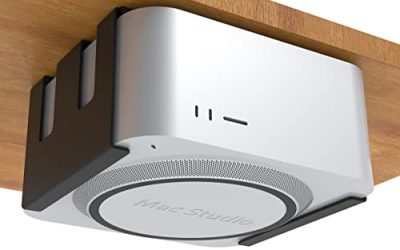
bylitco Mac Studio Desk Mount

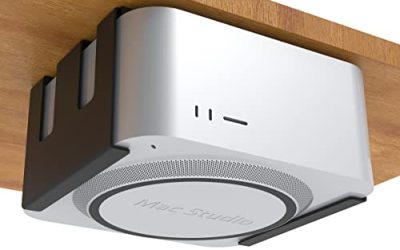
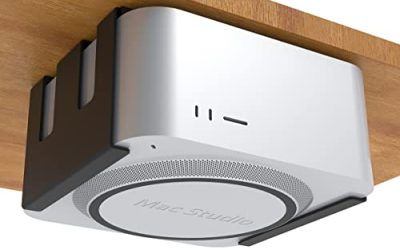
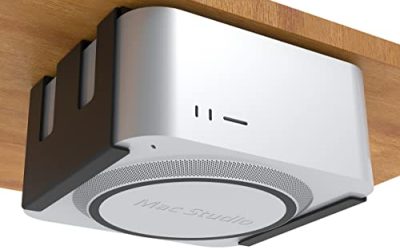
The mount earns its place in this routine by clearing the ground the tweed line needs. A computer that sits on the desk eats the back corner where the two cloth lines want to run, and the row ends up broken around a warm metal box. Lifting the machine into a mount frees that whole stretch of surface, so the tweed line can run unbroken from one end of the desk to the other and the felt line can sit behind it in a clean parallel. The fit is narrow on purpose: this mount is made for the Mac Studio only, shaped around that one machine, and it should never be treated as a universal holder for any small computer that happens to be nearby. Within the routine, that single-purpose fit is a strength. The machine sits in one fixed place, the cables fall behind the desk instead of across the cloth, and the front edge of the tweed line stays clear for names and reading order. If your desk runs a Mac Studio and the back corner is the only thing blocking a full-length row, this is the piece that removes the block and lets the two lines do their work in peace.
Specs
- Type: Desk mount
- Fit: Made for Mac Studio only
Vantasii Canvas Zipper Pouches
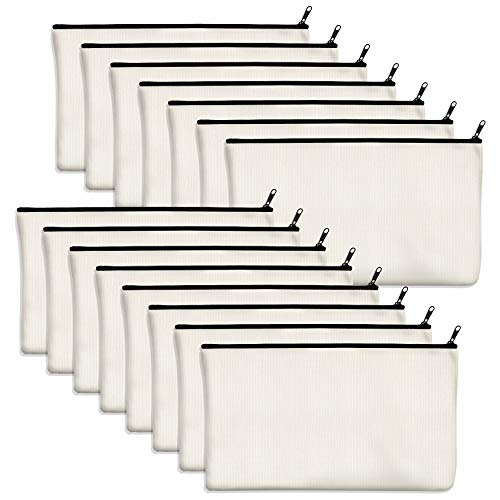
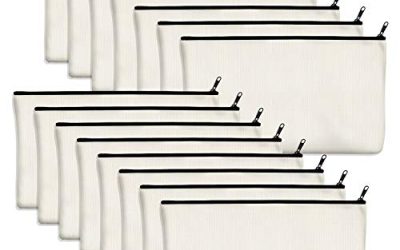
A row handles the notes in play; the pouches handle everything waiting its turn. Fifteen canvas pouches take the overflow that would otherwise creep back onto the desk: spare cards, folded slips, receipts waiting to be filed, the second copy of a list. Canvas is soft enough to sit in a drawer without scratching anything, firm enough to hold a shape when a pouch is half full, and the zipper keeps the contents from wandering when a pouch travels between desk and bag. Sort the pouches the way the row is sorted, one pouch per name or per stretch of the reading order, and the drawer becomes a quiet extension of the two lines above it. One limit matters and should be said plainly: the canvas is not waterproof, and the pouches are for dry storage only. A pouch rides happily in a work bag on a dry day; it does not belong near a sink, a wet coat or a leaking bottle. Kept dry, the set gives the routine its memory, holding what the row cannot show today while the tweed and felt lines keep today in plain sight.
Specs
- Pack size: 15 pouches
- Material: Canvas
- Closure: Zipper
- Water resistance: Not waterproof
feela Pocket Notebooks

Names carry the row, and the notebooks carry the names. Each book is pocket size, small enough to live beside the keyboard or in the same drawer as the pouches, and the pack holds three, so one book can serve the current row, one can hold the running log of what moved where, and one can stay blank for lists still forming. The pages take a daily log well: date at the top, the names along the tweed line in reading order, a short line for anything that changed hands. Because the books are plain paper, they ask for no charging, no syncing and no updates, and a filled book shelves away as the record of a season of desk work. One rule is firm: these notebooks are for logs and lists only, never for full passwords. A password written out in full in a pocket book is a risk carried in a coat; keep the books to names, orders, dates and lists, and let proper password tools do their own job. Used that way, the three books become the written half of the routine, the part that remembers what the cloth lines only show.
Specs
- Pack size: 3 notebooks
- Format: Pocket size
- Use: Logs and lists
- Note: Never for full passwords
Pilot G2 Pens

Every note in the row needs a name, and the name needs a pen that behaves. These gel pens write a clean, dark line on card, on labels and on the small slips that lean along the tweed, and the gel ink dries fast enough that a freshly named card can go straight into the row without smearing across the felt behind it. A fine point suits the scale of the work: names on a cloth line are short, space is tight, and a pen that blobs or skips turns a tidy row into a squint. The pens earn their keep in the daily rhythm of the routine, marking the front edge of the tweed line where a new name joins, noting a date on a log page, labeling a pouch before it goes back in the drawer. Keep one pen at the desk end of the row and one with the notebooks, so naming never waits on a search through a drawer. Simple tools, used dozens of times a week, are the ones a routine like this is built on, and a pen that writes first time, every time, keeps the two lines moving without friction.
Specs
- Type: Gel pens
- Use: Notes and labels
- Ink: Gel
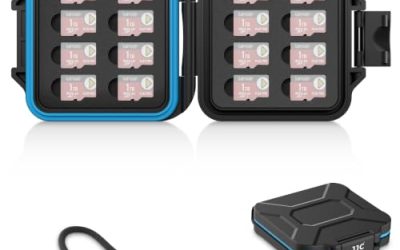
JJC Micro SD Card Case

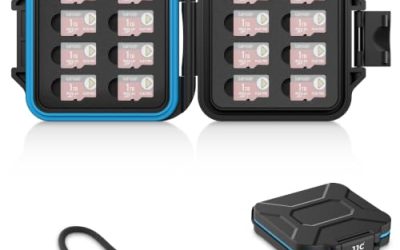
Cards multiply quietly in a desk routine: the card from the camera, the spare from the reader, the one holding scans of the log books. Loose, they vanish into drawers and turn up months later in the wrong coat. This case gives them one home, a small rigid box that lives beside the pouches and holds micro SD cards and nothing else. That narrow purpose is the point: storage only, for micro SD cards, in a case that closes over them and keeps dust and desk grit off the contacts. The maker does not state a capacity, so this guide makes no claim about how many cards the case holds; what matters for the routine is the habit, not a number. Every card comes out of a device and goes into the case, every card leaves the case and goes back, and the case returns to the same corner of the drawer. Pair it with a line in the log book noting which card holds what, and the smallest storage in the setup stays as orderly as the row of notes above it, each item findable in moments rather than after a rummage.
Specs
- Product type: Micro SD card storage case
- Use: Storage only, for micro SD cards
- Capacity: Not stated
FAQ
Why does the tweed line go down before the felt line?
Because the tweed is the working line of this pair. It is laid first and finished as a complete empty line, and it sets the spacing between notes, the front edge of the row and the whole look of the setup, and it carries the names and the reading order. The felt is added behind it afterward, purely to soften the lean of each note. Reversing the order gives you the companion version of the routine; this version lets the firmer, grippier cloth make every decision first.
How wide should the two lines be?
Wide enough that a leaning note touches both. The foot of the card sits on the tweed, the top edge rests on the felt, and the gap between the lines sets the angle of the lean. A hand’s width between the front edge of the tweed and the felt suits most cards and slips; tall pages want a wider gap and a lazier angle, small cards a narrower one. Set the gap once, on the tweed line, and keep it along the whole row.
What holds a note upright across two cloth lines?
The pair of them together. The tweed grips the foot of the note and stops it sliding forward, the felt cushions the top edge and stops it tipping back, and the note rests at a steady angle between the two. No pins, clips or stands are involved, which is the quiet charm of the routine: the cloth does the holding, and a note can be lifted out and put back with one hand while you read.
How do I keep the reading order when notes come and go?
Let the tweed line carry the order, and work from its front edge. A new note joins at the end of the row or in the gap its name earns it, never by shoving the whole line along. When a note leaves for good, close the gap and note the change in the log book the same day. A weekly pass along the line, book in hand, keeps the names on the cloth and the names on paper in step.
Final verdict
The tweed-first version of this routine suits a desk where order matters more than softness. Lay the tweed line first, finish it empty, let it set the spacing, the front edge, the look, the names and the reading order, and only then bring the felt in behind it to soften every lean. The five support pieces each guard one part of that order: the mount clears the corner, the pouches hold the overflow, the notebooks keep the log, the pens do the naming, and the little case keeps small cards from wandering. Build it once, keep the daily habits small, and the row will read like a table of contents for your desk.
Product and ASIN Reference
| Product | ASIN |
|---|---|
| bylitco Mac Studio Desk Mount | B0BL2XT3DJ |
| Vantasii Canvas Zipper Pouches | B08CMQ6QG4 |
| feela Pocket Notebooks | B0BG4MFCZC |
| Pilot G2 Pens | B001AQPQBQ |
| JJC Micro SD Card Case | B0B76BDXN8 |
More from Amazon
Programs that pair well with the guide above. Offers and eligibility are set by Amazon and may change.
Free shipping on eligible items, Prime Video and more. Eligible new members can start with a free trial.
Start a Prime free trialAd-free music streaming. Eligible new subscribers can start with a free trial.
Try Music Unlimited freeA Prime membership for ages 18-24 with a trial period. Eligibility is set by Amazon.
See Prime for Young AdultsAudiobooks and podcasts to listen to on the go. Eligible new members can start with a free trial.
Try Audible freeAs an Amazon Associate we earn from qualifying purchases.

Write Your Review
No reviews yet. Be the first to share your experience!