

Our Short List of 3
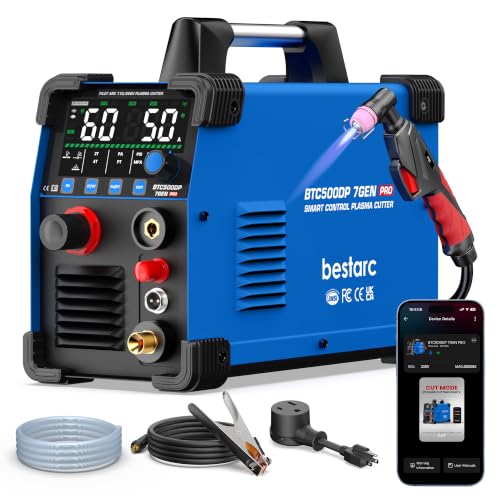
- Input: 110V/220V dual voltage
- Output: 50A, IGBT inverter
- Arc start: Non-touch pilot arc
- Clean cut: 1/2 inch at 220V, per the listing

- Input: 110V/220V dual voltage
- Output current: 20-50A
- Arc start: Non-touch pilot arc, IGBT inverter
- Ideal clean cut: 1/4 inch at 110V, 1/2 inch at 220V
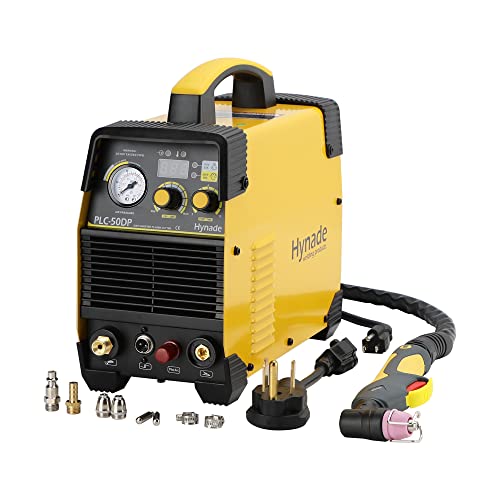
- Input: 110V/220V dual voltage
- Output: 50A
- Arc start: High-frequency non-touch pilot arc
- Quality cut: Up to 10mm, per the listing
All 4 Picks at a Glance
| Product | Specs | Action |
|---|---|---|
| 1. bestarc BTC500DP 7Gen Plasma Cutter, 50A |
| Check price on Amazon |
| 2. YESWELDER CUT-50DS Plasma Cutter, 50A |
| Check price on Amazon |
| 3. hynade PLC-50DP Plasma Cutter, 50A |
| Check price on Amazon |
 5. GZ GUOZHI 50A Plasma Cutter |
| Check price on Amazon |
Key takeaways
- Compare dual voltage 110V/220V plasma cutters for trade workshops, with pilot arc, clean cut capacity, duty cycle, air needs and torch control explained.
As an Amazon Associate we earn from qualifying purchases.
A trade workshop rarely cuts in one place, on one supply, or on one thickness of metal. In the morning the job might be trimming sheet and light plate at a bench fed by a standard outlet. By the afternoon it might be severing heavier mild steel near a dedicated higher-voltage circuit, cutting out a rusted bracket on a vehicle, or working through expanded metal on a gate or trailer. A dual voltage plasma cutter fits that pattern because it can run on 110V for lighter work and on 220V when the full output is needed, without the workshop having to keep two separate cutting machines.
That flexibility only helps if the rest of the machine matches the work. Amperage on its own does not tell the whole story. A workshop also needs to look at clean cut capacity at each voltage, maximum severance capacity, duty cycle, pilot arc type, air pressure and air volume requirements, torch lead length, and how the trigger controls work on long cuts. The five machines below are all dual voltage plasma cutters listed as 110V/220V models, and all sit in the 50-amp class that suits general fabrication, maintenance, repair, and light production work. They differ in displays, air monitoring, post-flow control, and the cutting modes they offer, so the best choice depends on how your shop actually works day to day.
Disclosure: This article contains affiliate links, and we may earn a commission if you buy through links on this page, at no extra cost to you.
Quick Picks
- Best all-round workshop pick: bestarc BTC500DP 7Gen, 50A — pilot arc, built-in air sensor, digital display, and 2T/4T control in a compact body.
- Best for clear settings at the bench: YESWELDER CUT-50DS — a large digital display showing air pressure, voltage, and current, with PT, 2T, and 4T modes.
- Best for straightforward pilot arc work: hynade PLC-50DP — high-frequency non-touch pilot arc, adjustable post-flow cooling, and a 4-metre torch lead in the listing.
- Best for mesh and varied trigger work: ANDELI CUT-50DS — HF pilot arc, 2T/4T functions, and a focus on clean cutting at 220V.
- Best simple digital alternative: GZ GUOZHI 50A Plasma Cutter — 50-amp output, digital display, and 2T/4T/TEST functions.
1. bestarc BTC500DP 7Gen Plasma Cutter, 50A
- Input: 110V/220V dual voltage
- Output: 50A, IGBT inverter
- Arc start: Non-touch pilot arc
- Clean cut: 1/2 inch at 220V, per the listing
The bestarc BTC500DP 7Gen is the most workshop-oriented machine in this group because it combines the core dual voltage hardware with the monitoring features a busy bench actually uses. Its listing describes a 50-amp IGBT inverter plasma cutter with non-touch pilot arc, a digital screen, a built-in air pressure sensor, and PT, 2T, 4T, and PA functions for post time, trigger control, and pilot arc timing. For a trade workshop, that combination matters: operators can see air pressure on the panel instead of guessing at the regulator, and they can switch trigger behaviour between short, precise cuts and longer runs.
On cutting capacity, the listing gives a recommended clean cut of 1/2 inch at 220V and a maximum cut of 2/3 inch at 220V, with a lower recommended capacity on 110V. That is the right way to read any dual voltage machine. On the lower supply it is a useful light and medium duty cutter for sheet, angle, and thinner plate. On 220V it becomes the machine you reach for when plate thickness rises and travel speed matters. The pilot arc also helps on painted, rusted, or coated metal, and on mesh, because the arc can start without the torch tip having to touch the workpiece in the way a contact-start machine requires.
Specifications
Pros
Cons
View the bestarc BTC500DP on Amazon
2. YESWELDER CUT-50DS Plasma Cutter, 50A
- Input: 110V/220V dual voltage
- Output current: 20-50A
- Arc start: Non-touch pilot arc, IGBT inverter
- Ideal clean cut: 1/4 inch at 110V, 1/2 inch at 220V
The YESWELDER CUT-50DS takes a similar 50-amp dual voltage platform and puts its emphasis on display clarity and trigger control. Its listing describes a large digital display, non-touch pilot arc, IGBT inverter technology, and a built-in post-flow function. The manual for the model states that the display shows parameters such as air pressure, voltage, and current, and also shows 2T/4T mode and error codes. In a shared workshop, that visibility is practical. A second operator can walk up to the machine, read the settings at a glance, and spot a fault code instead of working through a silent fault.
Its stated cutting figures separate the two voltages clearly. The manual lists an ideal clean cut of 1/4 inch at 110V and 1/2 inch at 220V, with a maximum cut of 3/8 inch at 110V and 5/8 inch at 220V. Those numbers describe a sensible trade use case: thinner fabrication, repairs, and sheet work on the lower supply, and half-inch plate work reserved for the higher supply. The PT function controls post-flow cooling time, which helps protect the torch and consumables after the arc stops, while 2T suits short cuts where the trigger is held, and 4T suits longer cuts where the trigger is pressed to start and pressed again to stop.
Specifications
Pros
Cons
View the YESWELDER CUT-50DS on Amazon
3. hynade PLC-50DP Plasma Cutter, 50A
- Input: 110V/220V dual voltage
- Output: 50A
- Arc start: High-frequency non-touch pilot arc
- Quality cut: Up to 10mm, per the listing
The hynade PLC-50DP is a simpler proposition: a 50-amp, high-frequency, non-touch pilot arc cutter with dual voltage input and adjustable post-flow. Its listing describes quality cuts up to 10mm and a maximum cutting thickness of 14mm, along with a post time function that can be adjusted to cool the torch and consumables after a cut. The listing also names a 4-metre AG60P pilot arc torch, an earth clamp, electrodes, tips, an air hose, and a regulator among the included accessories. Always confirm the exact box contents on the product page before ordering, because accessory bundles can change.
For trade work, the appeal here is reach and simplicity. A longer torch lead gives the operator more freedom around a vehicle, a frame, or a large sheet without dragging the power source across the floor. The non-touch pilot arc start is useful on rough, painted, or rusty surfaces, which are common in repair work rather than in clean new fabrication. The dual voltage input is described as automatic detection in the listing, so moving between supplies is intended to be straightforward, provided the correct plug, adapter, breaker, and receptacle for that supply are used.
Specifications
Pros
Cons
View the hynade PLC-50DP on Amazon
4. ANDELI CUT-50DS Plasma Cutter, 50A
The ANDELI CUT-50DS is another 50-amp dual voltage machine with HF pilot arc and 2T/4T control, aimed at workshops that cut a mix of solid plate and mesh or expanded metal. Its manual describes dual voltage operation on 110V and 220V, a clean cut up to 12mm, and a maximum severance up to 16mm at 220V, 50A, and 60 PSI. It also describes the two trigger modes in plain terms: 2T, where the trigger is held for the cut, and 4T, where one press starts the arc and another press stops it. That second mode reduces hand fatigue on longer straight cuts and on repetitive work along a guide.
Because the ANDELI figures are tied to a stated air pressure, they underline a point that applies to every cutter in this guide. Plasma capacity is not a property of the power source alone. Air pressure, air volume, air dryness, torch consumable condition, travel speed, and material type all change the result. A workshop that feeds any of these machines with wet or undersized air will get rougher edges and shorter consumable life than the specification suggests, whatever the brand on the front panel.
Specifications
- Input: 110V/220V dual voltage
- Output: 50A class, per the listing
- Arc start: HF pilot arc
- Clean cut: Up to 12mm, per the manual
- Maximum severance: Up to 16mm at 220V, 50A, 60 PSI, per the manual
- Controls: 2T and 4T functions
- Frequency: 50/60Hz
- Model: CUT-50DS
Pros
- Clean cut and severance figures are stated with voltage and air pressure
- 4T mode helps on long or guided cuts
- Pilot arc suits coated and rough surfaces
- Dual voltage covers both bench outlets and higher-voltage shop circuits
Cons
- Top capacity depends on reaching the stated 220V and air conditions
- Thinner material is the realistic workload on 110V
- Mesh and expanded metal work still consumes electrodes and tips faster
View the ANDELI CUT-50DS on Amazon
5. GZ GUOZHI 50A Plasma Cutter
- Input: 110V/220V dual voltage
- Output: 50A
- Arc start: Pilot arc, per the listing
- Duty cycle: 60%, per the listing
The GZ GUOZHI machine rounds out the list as a digital-display, 50-amp dual voltage option with 2T, 4T, and a TEST function. Its listing describes a 50-amp air inverter plasma cutter with IGBT inverter technology, a digital display, pilot arc, and a 60% duty cycle. The TEST function is a small but useful workshop detail, because it lets the operator check air flow without striking an arc, which is handy when setting a regulator or confirming that a compressor and hose are delivering air before a cut begins.
Duty cycle deserves attention in a trade setting. A 60% duty cycle figure means the machine is rated to cut for six minutes in a ten-minute period at the stated output before it needs the remainder of that period to cool. Short repair cuts rarely trouble that limit. Long production cuts, repeated severance cuts in thick plate, and hot workshop conditions can. If your workload is continuous cutting rather than intermittent fabrication, duty cycle and cooling matter as much as the headline amperage, and working in shorter runs with rest periods is part of using a compact inverter cutter well.
Specifications
Pros
Cons
View the GZ GUOZHI 50A Plasma Cutter on Amazon
How to Choose a Dual Voltage Plasma Cutter for a Trade Workshop
Start with the thickest material you cut regularly, not the thickest you might cut once. Choose a machine whose clean cut rating at 220V covers your regular plate with room to spare, and treat the maximum or severance figure as an occasional limit for separating material, not as a promise of a neat edge. Then check the same figures at 110V. If most of your work happens away from a 220V circuit, the lower-voltage clean cut is the number that will shape your day.
Next, check the electrical supply honestly. Dual voltage does not mean any outlet will deliver full output. Breaker size, receptacle type, cable length, and adapter quality all matter, and the manual for the specific model should be followed. A workshop should also confirm that the circuit is not already loaded by a compressor starting at the same moment as the cutter.
Air is the third decision. Every machine here needs an external compressor that can hold the required pressure and flow while cutting, not just reach it briefly. Fit a regulator and a water separator, drain the tank regularly, and keep spare electrodes, tips, and shield parts for the exact torch supplied. Pilot arc helps on dirty metal, but it does not compensate for wet air.
Finally, match the controls to the work. Choose 4T if operators make long cuts, post-flow adjustment if consumable life is a recurring cost, an air sensor or clear pressure display if several people share one machine, and a longer torch lead if the work is vehicles, frames, or fixed assemblies that cannot be brought to the bench. For most general trade workshops, a 50-amp dual voltage pilot arc machine is the practical middle ground: portable on 110V, and genuinely useful on plate when connected to 220V.
FAQs
Can a dual voltage plasma cutter run at full power on 110V?
No. On 110V the output and clean cut capacity are reduced. Full 50-amp performance and the thickest clean cuts listed for these machines require the 220V supply.
What is the difference between clean cut and maximum cut?
Clean cut is the thickness the machine can cut with a usable edge at a reasonable travel speed. Maximum cut, or severance, is the thickness it can separate, usually more slowly and with a rougher edge that needs more finishing.
Why does pilot arc matter in a trade workshop?
Pilot arc allows the arc to start without direct contact between the torch tip and the metal. That helps on painted, rusted, or coated surfaces and on mesh or expanded metal, where a contact start is harder to maintain.
Do these plasma cutters include an air compressor?
No. These are air plasma cutters that require a separate compressor. Check the pressure and flow the model requires, and use clean, dry air to protect consumables and cut quality.
What does duty cycle mean for workshop use?
Duty cycle is the portion of a ten-minute period the machine can cut at the stated output before it must cool. Intermittent repair work rarely reaches the limit, while long continuous cuts in thick material can.
Which metals can these machines cut?
Plasma cutters cut electrically conductive metals. The listings for these models name materials such as mild steel, stainless steel, alloy steel, aluminium, and copper, within the thickness limits for the voltage being used.
Conclusion
For a trade workshop needing one cutter for light bench work and heavier plate work, the bestarc BTC500DP 7Gen is the strongest all-round choice here, pairing 50-amp dual voltage output with an air sensor, digital display, and flexible trigger and pilot arc timing controls. The YESWELDER CUT-50DS is close behind for shops valuing a large display and well-separated 110V and 220V cutting figures. The hynade PLC-50DP suits repair work where torch reach matters, the ANDELI CUT-50DS suits mixed solid and mesh cutting with 2T/4T control, and the GZ GUOZHI model offers a simpler digital alternative with a useful air TEST function. Whichever model you choose, size the compressor and circuit first, and judge it by its clean cut at the voltage you will actually use.
More from Amazon
Programs that pair well with the guide above. Offers and eligibility are set by Amazon and may change.
Free shipping on eligible items, Prime Video and more. Eligible new members can start with a free trial.
Start a Prime free trialAd-free music streaming. Eligible new subscribers can start with a free trial.
Try Music Unlimited freeA Prime membership for ages 18-24 with a trial period. Eligibility is set by Amazon.
See Prime for Young AdultsAudiobooks and podcasts to listen to on the go. Eligible new members can start with a free trial.
Try Audible freeAs an Amazon Associate we earn from qualifying purchases.

Write Your Review
No reviews yet. Be the first to share your experience!