

Key takeaways
- The best inverter plasma cutters for farm workshops cut rusty steel fast. Compare dual-voltage models, cut capacity, duty cycle, and air needs before you buy.
As an Amazon Associate I earn from qualifying purchases.
The Short Answer
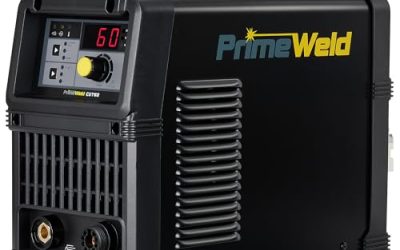
The best inverter plasma cutter for most farm workshops is the PRIMEWELD CUT60. It runs on 120V or 240V, delivers 60 amps on 240V power, and uses a non-touch blowback pilot arc that starts cleanly on painted, rusty, and dirty steel. Its 60 percent duty cycle at full output keeps it cutting through long repair sessions, and the CNC port leaves the door open if you ever add a cutting table.
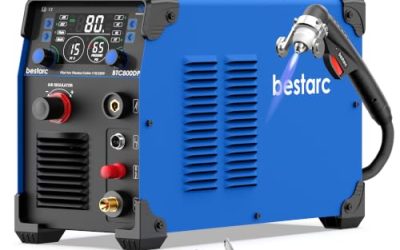
If the CUT60 is more machine than your work calls for, the YESWELDER CUT-55DS PRO is the lighter alternative for patch panels, brackets, and general repair cutting. The YESWELDER CUT-60DS PRO matches the CUT60 at 60 amps with a non-high-frequency start. And the ARCCAPTAIN CUT60 HF adds dedicated modes for plate cutting, expanded metal, and rust cleaning, which suits a shop that cuts a lot of grating and salvaged material.
Every machine in this guide is an inverter-based plasma cutter with dual-voltage input and a pilot arc. Before you buy, confirm the input plug, the air requirement, and the included accessories on the listing.
Our Top Picks
- PRIMEWELD CUT60 — Best overall: 60 amps, a strong duty cycle, and a CNC port.
- YESWELDER CUT-55DS PRO — Best lighter-weight pick for repair cutting and carrying around.
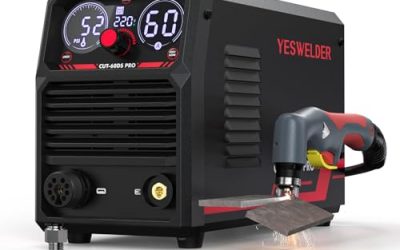
- YESWELDER CUT-60DS PRO — Best 60-amp alternative with a non-high-frequency start and a large digital display.
- ARCCAPTAIN CUT60 HF — Best for expanded metal and rusty salvaged steel, with three cutting modes and air pressure detection.
Quick Comparison
| Product | Best for | Key spec | Amazon link |
|---|---|---|---|
| PRIMEWELD CUT60 | All-round farm shop work and long cutting sessions | 60A on 240V, 60 percent duty cycle at full output | https://www.amazon.com/dp/B07BYJPGB1 |
| YESWELDER CUT-55DS PRO | Light repair cutting and portability | 55A, non-high-frequency pilot arc, IPT40 torch | https://www.amazon.com/dp/B0CWMY354P |
| YESWELDER CUT-60DS PRO | Full 60A power in a compact unit | 60A, non-high-frequency pilot arc, digital display | https://www.amazon.com/dp/B09L3Y3ZLF |
| ARCCAPTAIN CUT60 HF | Expanded metal, grating, and rusty salvaged steel | 60A on 220V, three cutting modes, AG60 torch | https://www.amazon.com/dp/B0FWK7G1SY |
How to Choose
Match the amperage to the steel you actually cut
Farm repair spans thin sheet on a grain bin, quarter-inch plate on a loader bucket, and half-inch steel on a hitch or frame. A 55-amp machine handles sheet and light plate, but a 60-amp machine cuts half-inch steel with far less struggle and a cleaner edge. Match the machine to the thickest steel you cut at least once a month, not the thickest piece you have ever seen.
Check your power before anything else
Every cutter in this guide runs on both 120V and 240V, but output drops sharply on 120V. The CUT60 tops out at 30 amps on a 120V outlet and reaches its full 60 amps only on 240V. Before you order, check whether you have a 240V receptacle near where you cut, what plug type it uses, and what breaker protects it.
Pilot arc type matters on farm steel
Farm steel comes painted, rusted, greasy, and caked with field dirt. A pilot arc starts the cut without the tip touching the metal, which keeps the tip alive longer and cuts through paint and rust without grinding a clean spot first. Look for non-touch and blowback pilot arc designs. Scratch-start machines wear consumables faster on dirty steel and struggle on expanded metal, where the arc must restart constantly as it crosses gaps.
Air supply is half the machine
A plasma cutter is only as good as the air feeding it. Each machine needs clean, dry, compressed air at a set pressure and flow. The CUT60 asks for about 5 CFM at 90 PSI, and its maker suggests a compressor of at least 20 gallons for sustained use. A small pancake compressor will starve the torch, which shows up as a sputtering arc and ragged edges. Check your compressor’s delivered CFM at the pressure the cutter needs, not the headline number on the tank, and add a moisture separator and air filter if your barn air runs damp.
Duty cycle decides how long you can keep cutting
Duty cycle tells you how many minutes out of ten the machine can cut at a given output before it needs to cool down. A 60 percent duty cycle at full output means six minutes of cutting in every ten. Read the duty cycle at the amperage you will actually use, because the number changes with output.
Weight and portability
Farm work does not always happen at the bench. Sometimes the cutter must go to the broken combine in the field or to a torn gate hinge at the fence line. A machine near 11 pounds is easy to carry one-handed; a machine over 30 pounds is a two-hand carry and usually stays in the shop. Remember that the torch lead, ground clamp cable, and air hose all add to what you carry.
Consumables and torch family
Consumables are the running cost of plasma cutting: tips, electrodes, and shields wear with every arc start. Before you commit, check that the torch family has consumables available on Amazon and that the part numbers are easy to find. The PT60 and IPT60, AG60, and IPT40 families all have broad aftermarket support. Keep spares on hand and change tips before they are fully worn, because a worn tip costs more in bad cuts than a fresh tip costs to replace.
The Picks in Detail
PRIMEWELD CUT60 — Best Overall
The CUT60 is the strongest dedicated plasma cutter in this guide and the one most farm workshops should start with. It delivers 20 to 30 amps on 120V and 20 to 60 amps on 240V, with a 60 percent duty cycle at full output on 240V and a 100 percent duty cycle at 46 amps. Published cutting capacity reaches up to 7/8 inch steel under suitable conditions, with a clean cut of about 1/2 inch, covering everything from sheet metal to the plate used on hitches, buckets, and frames.
The non-touch blowback pilot arc is the feature that matters most on a farm. It starts the arc without the tip touching the metal, so painted, rusty, and dirty steel cuts without grinding a clean spot first, and expanded metal cuts without constant restarts. The PT60 torch uses a Euro central connection, and a built-in CNC port with 2T and 4T trigger control keeps the machine useful if you later add a cutting table. PrimeWeld backs the CUT60 with a 3-year warranty and US-based support.
Pros
- Full 60 amps on 240V with a genuine 60 percent duty cycle at full output
- Non-touch blowback pilot arc handles rusty, painted, and dirty steel
- CNC port and 2T/4T control for future table use
- PT60 torch family with wide consumable availability
- 3-year warranty with US-based support
Cons
- Heavier than the other picks at about 33.5 pounds, so it mostly stays in the shop
- Output drops to 30 amps on a 120V outlet
- Needs a solid compressor to sustain long cuts
YESWELDER CUT-55DS PRO — Best Lighter-Weight Pick
The CUT-55DS PRO is the machine to grab when the job is a patch panel, a bracket, or a quick repair and you want to carry the cutter to the work. It is a 55-amp inverter plasma cutter with dual-voltage 110V and 220V input, a non-high-frequency non-touch pilot arc, and a large LED digital display that is easy to read in a dim barn. The IPT40 torch keeps the front end light and easy to steer on thin material.
Published cutting capacity is a clean cut of 1/3 inch at 110V and 1/2 inch at 220V, with a maximum cut of 1/2 inch at 110V and 4/5 inch at 220V; confirm the exact figures on the listing, because YESWELDER lists slightly different numbers across its model variants. The unit carries an IP21 protection rating, with overload and overheat protection, and includes a built-in rear air filter. The manual lists the unit weight near 11 pounds, while the Amazon listing shows a higher packaged weight, so confirm the listed weight on the listing. It ships from Amazon and is sold by YESWELDER.
Pros
- Light and easy to carry to field repairs
- Non-high-frequency start avoids interference with nearby electronics
- Large LED display is easy to read in low light
- Built-in rear air filter helps with dusty barn air
- Clean cut of 1/2 inch on 220V covers most repair plate
Cons
- 55 amps tops out below the 60-amp picks on thick plate
- Maximum cut figures vary across YESWELDER model variants, so confirm on the listing
- Better suited to light work than long production runs
YESWELDER CUT-60DS PRO — Best 60-Amp Alternative
The CUT-60DS PRO is YESWELDER’s full-power answer: a 60-amp inverter plasma cutter with the same non-high-frequency non-touch pilot arc and large digital display as the 55-amp model, but with the extra output for thicker steel. It runs on 110V and 220V dual voltage, uses an IPT40 blowback torch, and is built around a DC inverter with digital control. It ships from Amazon and is sold by YESWELDER.
Where the CUT-55DS PRO is the light carry, the CUT-60DS PRO is the compact heavy hitter. The extra amperage shows up most clearly on half-inch plate, where the cut stays steady instead of slowing to a crawl. The non-high-frequency start is a real advantage in a farm shop full of electronics, because it starts the arc without the electrical noise a high-frequency start can create. Confirm the published clean-cut thickness, maximum cut, duty cycle, and weight on the listing, because YESWELDER does not state those figures consistently across its listings.
Pros
- Full 60 amps for thicker plate and faster cuts
- Non-high-frequency blowback start is gentle on nearby electronics
- Large digital display with straightforward controls
- Dual voltage for barn and field outlets
- Compact footprint for a 60-amp machine
Cons
- Published cut capacity and duty cycle figures are not stated consistently, so confirm on the listing
- IPT40 torch is smaller than the PT60 family on the CUT60
- No CNC port is listed for this model
ARCCAPTAIN CUT60 HF — Best for Expanded Metal and Rusty Steel
The ARCCAPTAIN CUT60 HF takes a different approach: instead of one cutting mode, it gives you three. Plate cutting handles solid steel, expanded-metal cutting keeps the arc alive across the gaps in mesh and grating, and a rust-clean mode is aimed at salvaged and weathered material. That combination fits a farm shop that cuts a lot of cattle panels, grating, and scrap steel, where a single-mode cutter would stall and restart all day.
It delivers up to 60 amps on 220V, runs on 110V and 220V dual voltage, and uses an AG60 cutting torch with a non-touch pilot arc. Air pressure detection warns you when the air supply drops below what the torch needs, the most common cause of poor cuts in a farm shop. The package includes an air hose, earth clamp, torch, nozzles, and electrodes. Confirm the published clean-cut thickness, maximum cut, and duty cycle on the listing.
Pros
- Three cutting modes cover plate, expanded metal, and rusty steel
- Air pressure detection catches a weak compressor before it ruins a cut
- 60 amps on 220V for thick material
- AG60 torch with broad consumable support
- Large LED display
Cons
- High-frequency arc start, so keep it away from sensitive electronics while cutting
- Published cut capacity and duty cycle figures need confirming on the listing
- Newer brand with a shorter track record than the other picks
Who Should Choose What
Choose the PRIMEWELD CUT60 if your farm shop is the main repair station for tractors, implements, and trailers, and you want one machine that handles the full range from sheet to half-inch plate. It is the pick for long cutting sessions, for anyone who may add a CNC table later, and for buyers who want the strongest duty cycle in this guide.
Choose the YESWELDER CUT-55DS PRO if most of your cutting is light repair work and you value carrying the machine to the job. It suits patch panels, brackets, gates, and fencing repairs, and it is the easiest pick to lift into a truck bed.
Choose the YESWELDER CUT-60DS PRO if you want 60-amp power in a compact unit and prefer a non-high-frequency start. It fits a shop that cuts thick plate regularly but has limited bench space.
Choose the ARCCAPTAIN CUT60 HF if your cutting list is heavy on expanded metal, grating, cattle panels, and salvaged steel. The dedicated modes and air pressure detection address the exact problems those materials create.
If you cut mostly thin sheet, any of these machines will do the job, and the lighter YESWELDER is the most pleasant to live with. If you cut half-inch plate weekly, do not settle below 60 amps.
Common Mistakes
Buying on amperage alone. A 60-amp headline means little if the duty cycle at that output is short or your circuit only delivers 120V. Read the duty cycle and the 120V output together.
Undersizing the compressor. The most common reason a new plasma cutter cuts poorly is an air supply that cannot hold pressure and flow. Check the cutter’s CFM requirement at its working pressure against your compressor’s delivered CFM, and add a moisture separator. A cutter starved of air burns tips fast and leaves ragged edges.
Cutting without a clean ground. A plasma arc needs a solid return path. Clamp the ground to clean metal close to the cut, not to a painted surface or a rusty bolt three feet away. A weak ground shows up as an arc that wanders or refuses to start.
Running worn consumables. Tips and electrodes are wear parts. A worn tip makes the arc wander, widens the kerf, and leaves heavy dross on the back of the cut. Replace consumables before they are fully worn out, and keep spares on hand.
Cutting near fuel, hay, and dust. Plasma cutting throws sparks and hot metal well beyond the cut line. Clear the area of hay, straw, fuel cans, and oily rags, and keep a fire watch after cutting in a barn.
FAQ
Do I need a separate air compressor for an inverter plasma cutter?
Yes. None of the cutters in this guide has a built-in compressor, so each one needs an external compressed air supply. Check the cutter’s required CFM at its working pressure against your compressor’s delivered output, and add a moisture separator and air filter, because clean, dry air extends consumable life and improves cut quality.
Can a plasma cutter cut rusty or painted steel?
Yes, and that is one of its main advantages over a cutting torch on farm equipment. A pilot arc machine starts the cut without touching the metal, so paint, rust, and dirt do not block the arc. Knocking off heavy scale first gives a cleaner edge, but grinding to bare metal is not required before every cut.
What thickness of steel can a 60-amp plasma cutter handle?
A 60-amp inverter cutter typically makes a clean cut in steel around 1/2 inch thick and can sever thicker material up to about 7/8 inch under suitable conditions. The PRIMEWELD CUT60, for example, is published for cutting steel up to 7/8 inch. Confirm the figures for the exact model on its listing, because those numbers vary between brands.
Is 120V power enough for farm repairs?
It depends on the job. On 120V, a dual-voltage cutter typically delivers about half its full output, which is enough for sheet metal and light brackets but slow on plate. For half-inch steel and long cuts, 240V power makes a clear difference, so plan the wiring before you buy if your shop lacks a 240V outlet.
How long do plasma cutter consumables last?
It varies with the material, the air quality, and the number of arc starts. Clean, dry air and a pilot arc extend tip and electrode life, while damp air and repeated starts on expanded metal wear them faster. Keep spares on hand and replace them at the first sign of a wandering arc or a widening cut.
Conclusion
For most farm workshops, the PRIMEWELD CUT60 is the right first plasma cutter: 60 amps on 240V, a non-touch blowback pilot arc for rusty and painted steel, a 60 percent duty cycle at full output, and a CNC port for later. The YESWELDER CUT-60DS PRO is the closest runner-up, matching the CUT60 at 60 amps in a more compact package with a non-high-frequency start, and it is the better pick if bench space is tight.
If your work is mostly light repairs, the YESWELDER CUT-55DS PRO covers the common jobs at 55 amps and is the easiest machine to carry. If expanded metal, grating, and salvaged steel dominate your cutting list, the ARCCAPTAIN CUT60 HF and its three cutting modes are worth a close look. Whichever you choose, size the compressor to the cutter, ground the work properly, and confirm the plug and air requirement on the listing before you order.
More from Amazon
Programs that pair well with the guide above. Offers and eligibility are set by Amazon and may change.
Free shipping on eligible items, Prime Video and more. Eligible new members can start with a free trial.
Start a Prime free trialAd-free music streaming. Eligible new subscribers can start with a free trial.
Try Music Unlimited freeA Prime membership for ages 18-24 with a trial period. Eligibility is set by Amazon.
See Prime for Young AdultsAudiobooks and podcasts to listen to on the go. Eligible new members can start with a free trial.
Try Audible freeAs an Amazon Associate we earn from qualifying purchases.
Write Your Review
No reviews yet. Be the first to share your experience!