
Key takeaways
- Compare the 3 best benchtop drum sanders with variable conveyor speeds for November 2026: feed control, widths, motors and dust ports compared.
A benchtop drum sander earns its bench space when it can flatten a glued-up panel and leave a finish-ready surface without burning the wood or stalling on hard maple. The conveyor speed is the control that decides both outcomes: run it too fast and the drum skips and chatters, run it too slow and heat builds up and leaves dark marks. A variable-speed conveyor lets you match the feed to the wood, the grit and the depth of cut, which matters most on wide panels, figured grain and thin stock that a planer would tear out.
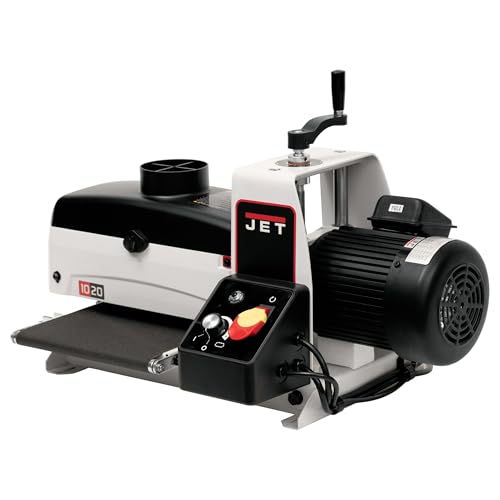

This guide covers three benchtop drum sanders with variable conveyor speeds for home workshops, small furniture shops and makers who sand panels, cabinet doors and cutting boards. The picks come from Amazon listing names and specifications: a compact JET 10-inch model with a two-pass capacity, a dual-motor VEVOR 10-inch model with a wide feed range, and a 12-inch Grizzly baby drum sander for wider boards.
Quick Picks
As an Amazon Associate we earn from qualifying purchases.
| Product | Best for | Key spec from title |
|---|---|---|
| JET JWDS-1020 Benchtop Drum Sander | Small shops sanding panels up to 20 inches wide | 1 HP motor, 10-inch drum, 0 to 10 FPM variable feed |
| VEVOR 10-Inch Benchtop Drum Sander | Furniture makers wanting separate drum and feed motors | 1 HP dual motor, 1725 RPM, variable-speed conveyor belt |
| Grizzly G0459 Baby Drum Sander | Shops sanding 12-inch boards in a single pass | 1-1/2 HP motor, 12-inch width, variable-speed conveyor |
How to Choose
Match the drum width to your panels
Drum width decides how much of a board you can sand in one pass, and that shapes everything else about the machine. A 10-inch drum handles drawer fronts, cutting boards and narrow cabinet parts in a single pass, and it can cover a 20-inch panel by flipping the board and running it through a second time. A 12-inch drum covers wider stock in one pass, which saves time when you sand cabinet doors in batches. Measure the widest panels you build before you pick, because a drum that is too narrow means double handling on wide boards, while a drum that is too wide wastes bench space on work you never do.
Read the feed range, not just the top speed
The feed range tells you how much control you have over the cut, and a wide range is more useful than a fast top speed. A conveyor that runs from 0 to 10 feet per minute lets you crawl through curly maple at a slow feed and move faster on pine, while a conveyor rated from 0 to 3.5 meters per minute gives the same spread. Slow feeds suit hardwoods, figured grain and heavy cuts, where heat and burning are the danger. Faster feeds suit softwoods and light finishing passes. Look for a marked dial and a belt tracker that keeps the conveyor centred, since a wandering belt causes uneven sanding.
Check motor power and drum speed together
Motor power and drum speed work as a pair, so judge them together rather than alone. A 1 HP motor turning a drum at 1720 RPM handles most hobbyist and small-shop work, including panels, doors and cutting boards, as long as you take light passes. A 1-1/2 HP motor gives extra muscle for dense hardwoods and wider boards, where a smaller motor would slow down or trip its breaker. Drum speed also affects finish: a faster drum removes material quickly but builds heat sooner, so it needs a slower feed on tricky grain. Match the motor to the hardest wood you sand regularly, not to the easiest.
Plan dust collection and bench space before you buy
A drum sander makes fine dust in large amounts, so dust collection is part of the purchase, not an afterthought. All three machines in this guide use a 4-inch dust port, which connects to a standard collector and keeps the abrasive clean and the cut cool. Weight matters as much: the lightest machine here is 73 pounds and the heaviest is over 130 pounds, so check that your bench can carry the load and that you have a spot for the heavier models. Also confirm the thickness range, since these machines handle stock from 1/32 inch to 3 inches thick, and leave room at both ends for infeed and outfeed support.
The 3 Best Options
JET JWDS-1020 Benchtop Drum Sander
The JET JWDS-1020 is the best-known benchtop drum sander in this group, and its listing makes the case plainly: a 10-inch drum that sands boards up to 20 inches wide in two passes, with material from 1/32 inch to 3 inches thick. The infinitely variable feed runs from 0 to 10 feet per minute, so you can crawl through curly maple and move faster on pine. A self-cooling aluminum drum, toolless abrasive take-up fasteners and a parallelism dial keep setup simple, while the built-in circuit breaker guards the motor when a cut gets heavy.
Specs
- 1 HP motor, 115 volts, corded electric
- Maximum rotational speed: 1720 RPM
- Infinitely variable feed: 0 to 10 feet per minute
- Item weight: 73 pounds
- Preinstalled 80-grit abrasive wrap included
- 5-year warranty
Best for: Small shops sanding panels up to 20 inches wide in two passes.
Watch out for: At 73 pounds it needs a sturdy bench, and wide boards need a second flipped pass.
VEVOR 10-Inch Benchtop Drum Sander
The VEVOR 10-inch benchtop drum sander pairs a 1 HP dual-motor design with a variable-speed conveyor, giving the drum and the feed separate motors so each can hold its pace under load. The conveyor adjusts from 0 to 3.5 meters per minute, and a belt tracker keeps the belt centered while boards move through. A 4-inch dust port with an adapter connects to standard collection, and the aluminum drum handles boards up to 10 inches wide and 1/32 to 3 inches thick, which suits cabinet parts and furniture panels.
Specs
- 1 HP dual motor, corded electric
- Maximum rotational speed: 1725 RPM
- Conveyor speed: 0 to 3.5 meters per minute, variable
- Item weight: 130.16 pounds
- 4-inch dust collection port with adapter included
- 120-grit sanding sheet included
Best for: Furniture makers who want separate drum and feed motors in a compact footprint.
Watch out for: At over 130 pounds it is heavy for a benchtop machine, so plan a permanent spot for it.
Grizzly G0459 Baby Drum Sander
The Grizzly G0459, sold as the 12-inch Baby Drum Sander, is the widest benchtop option here, taking boards up to 12 inches wide in a single pass. Its 1-1/2 HP motor gives it more muscle than the 10-inch models for dense hardwoods, and the variable-speed conveyor lets you slow the feed when the cut gets demanding. The compact frame fits a workbench, yet the extra width means fewer flipped passes on cabinet doors and drawer fronts, which saves time on batch work.
Specs
- 12-inch maximum board width
- 1-1/2 HP sanding motor
- Variable-speed conveyor feed
- Listed as Grizzly Industrial G0459-12 1-1/2 HP Baby Drum Sander
Best for: Shops that regularly sand 12-inch boards and want fewer two-pass flips.
Watch out for: Check bench strength and dust collection before ordering, since the wider drum and stronger motor suit heavier use.
Which One Fits Your Situation
Your bench is small and your panels are narrow
Choose the JET JWDS-1020. At 73 pounds it is the lightest machine in this guide, and its 10-inch drum covers drawer fronts, cutting boards and narrow cabinet parts in a single pass. The two-pass capacity still reaches 20-inch panels when you need it, so a small bench does not lock you out of wider work.
You want separate motors for the drum and the feed
Choose the VEVOR 10-inch benchtop drum sander. Its dual-motor design gives the drum and the conveyor independent power, so a heavy cut is less likely to slow the feed. The variable conveyor runs from 0 to 3.5 meters per minute, and the belt tracker keeps boards moving straight through the machine.
You mostly sand wide cabinet doors
Choose the Grizzly G0459. Its 12-inch width sands a full cabinet door in a single pass, which removes the flipping and re-alignment that a 10-inch drum needs on wide stock. The 1-1/2 HP motor also holds its pace better on dense hardwoods, so batch sanding goes faster with fewer interruptions.
You are setting up your first drum sander
Choose the JET JWDS-1020. Toolless abrasive take-up fasteners make paper changes quick, the parallelism dial squares the conveyor without tools, and the built-in circuit breaker protects the motor while you learn how deep a cut the machine can take. The 5-year warranty adds cover while you build experience.
Common Mistakes
- Taking too deep a cut on the first pass, which burns the wood, loads the abrasive and trips the motor breaker.
- Running the conveyor too fast on figured grain, which causes chatter marks and an uneven surface.
- Sanding without dust collection connected, which clogs the abrasive, overheats the drum and fills the shop with fine dust.
- Skipping the parallelism check, so one side of a panel ends up thinner than the other.
- Feeding boards narrower than the minimum stock size, which lets thin pieces tip into the drum and damage the conveyor belt.
Frequently Asked Questions
What does a variable-speed conveyor do on a drum sander?
A variable-speed conveyor controls how fast the board moves under the spinning drum. A slow feed gives the drum more time on each spot, which suits hardwoods, figured grain and heavy cuts. A faster feed suits softwoods and light finishing passes. Changing the feed is the simplest way to stop burning and chatter without changing the abrasive grit.
Can a 10-inch benchtop drum sander handle a 20-inch panel?
Yes, by sanding one half of the panel and then flipping it to sand the other half. The drum covers 10 inches per pass, so a 20-inch panel needs two passes with an overlap in the middle. Keep the depth of cut light and the feed steady so the overlap does not leave a visible line on the finished surface.
How thick can stock be in a benchtop drum sander?
The machines in this guide handle stock from 1/32 inch to 3 inches thick. Very thin stock needs a carrier board underneath it so it feeds flat and does not tip into the drum. Stock near the 3-inch limit needs light passes and a slow feed, since the drum removes little material per pass by design.
Do I need dust collection for a benchtop drum sander?
Yes. A drum sander creates a large amount of fine dust, and the machines in this guide all have a 4-inch dust port for a collector. Running without collection clogs the abrasive quickly, lets heat build up on the drum and leaves dust across the shop. Connect the collector before the first pass and check that the hose stays clear.
More from Amazon
Programs that pair well with the guide above. Offers and eligibility are set by Amazon and may change.
Free shipping on eligible items, Prime Video and more. Eligible new members can start with a free trial.
Start a Prime free trialAd-free music streaming. Eligible new subscribers can start with a free trial.
Try Music Unlimited freeA Prime membership for ages 18-24 with a trial period. Eligibility is set by Amazon.
See Prime for Young AdultsAudiobooks and podcasts to listen to on the go. Eligible new members can start with a free trial.
Try Audible freeAs an Amazon Associate we earn from qualifying purchases.
Write Your Review
No reviews yet. Be the first to share your experience!