
Our Short List of 3
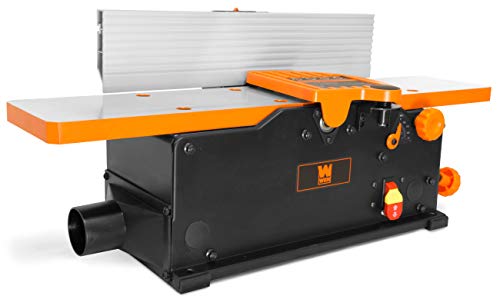
- Best for: Home shops with limited bench space jointing boards up to six inches wide.
- 10-amp motor with a cutterhead speed of 12,000 RPM
- Spiral cutterhead with 12 staggered HSS blades
- Table measures 30 by 6 inches
- Adjustable fence measures 19-3/4 by 4-1/4 inches and bevels up to 45 degrees
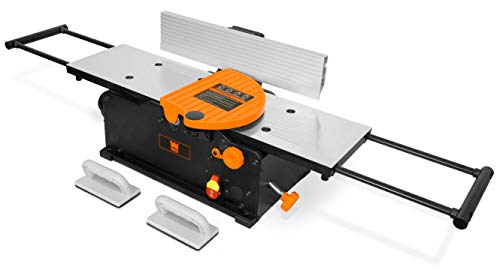
- Best for: Furniture makers jointing wide boards and long stock on a benchtop machine.
- 10-amp motor with a cutterhead speed of 12,000 RPM
- Spiral cutterhead with 16 staggered HSS blades
- Table measures 33 by 8 inches, with support arms extending to 51 inches
- Adjustable fence measures 19-3/4 by 4-1/4 inches and bevels up to 45 degrees

- Best for: Shops that joint wide boards often and want a long, well-supported fence.
- 10-amp motor
- Spiral cutterhead with 16 two-sided tungsten carbide inserts in 6 rows
- Cast iron tables
- Adjustable 24-inch aluminum fence with quick stops at 90 and 135 degrees
All 5 Picks at a Glance
| Product | Specs | Action |
|---|---|---|
| WEN JT630H 10-Amp 6-Inch Spiral Benchtop Jointer |
| Check price on Amazon |
| WEN JT833H 10-Amp 8-Inch Spiral Benchtop Jointer with Extendable Table |
| Check price on Amazon |
| Cutech 40180HI 8-Inch Spiral Cutterhead Benchtop Jointer |
| Check price on Amazon |
 Cutech 40160HB 6-Inch Spiral Cutterhead Benchtop Jointer |
| Check price on Amazon |
| WEN JT3062 10-Amp 6-Inch 2-Blade Benchtop Jointer |
| Check price on Amazon |
Key takeaways
- Find a benchtop jointer with an adjustable fence that fits your bench and your boards. Compare five spiral and straight-knife models side by side.
Choosing a benchtop jointer with an adjustable fence is a decision about control over angles, not about raw cutting width. A fixed fence only squares an edge, while a fence that tilts lets you bevel a board, chamfer a leg, or cut a splayed apron without reaching for another tool. The fence also decides how repeatable those angles stay from the first board to the last, because a fence that drifts under pressure turns careful setup into wasted lumber. Before comparing motors and cutterheads, settle how much angle work your projects actually need, and let that answer shape the machine you bring home.
This guide covers five benchtop jointers for home shops, small garages, and furniture makers working with boards up to eight inches wide. Every machine here sits on a bench, carries an adjustable fence, and lists its cutterhead, table, and fence dimensions on its Amazon listing, so you can compare the same details across all five before choosing one.
Quick Picks
As an Amazon Associate we earn from qualifying purchases
| Product | Best for | Key spec from title |
|---|---|---|
| WEN JT630H 10-Amp 6-Inch Spiral Benchtop Jointer | Small benches and narrow stock | 12 staggered HSS blades, 10-amp motor |
| WEN JT833H 10-Amp 8-Inch Spiral Benchtop Jointer with Extendable Table | Wide boards and long stock | 16 staggered HSS blades, 33-by-8-inch table |
| Cutech 40180HI 8-Inch Spiral Cutterhead Benchtop Jointer | Cast iron tables and a long fence | 16 two-sided tungsten carbide inserts |
| Cutech 40160HB 6-Inch Spiral Cutterhead Benchtop Jointer | Compact carbide setup with coated tables | 12 two-sided tungsten carbide inserts |
| WEN JT3062 10-Amp 6-Inch 2-Blade Benchtop Jointer | Straight-knife simplicity on a budget bench | Two-blade cutterhead, up to 22,000 cuts per minute |
How to Choose
Match the fence to the angles you cut
The fence is the point of this guide, so read its adjustment range before anything else. A fence that bevels to 45 degrees handles chamfers and splayed legs, while a fence with quick stops at 90 and 135 degrees repeats the two angles furniture makers use most. Check the fence length as well, because a short fence gives a long board less guidance and lets it wander mid-pass. Finally, look at how the fence locks: a single lever that holds firm under hand pressure keeps an angle true, while a lock that needs constant re-tightening wastes setup time on every board.
Pick a cutting width for the boards you actually buy
Six inches covers edge jointing on almost any board and face jointing on narrow stock, which suits shelves, boxes, and small tables. Eight inches opens up face jointing on wider furniture boards and glued-up panels, so consider it if your lumber rack holds stock wider than six inches. Wider machines also weigh more and take up more bench, so measure your bench before choosing width over portability. A machine that never fits the bench it was bought for helps nobody, no matter how wide its table runs.
Choose the cutterhead by maintenance, not by marketing
A spiral cutterhead spreads the cut across many small inserts, which suits figured grain and reduces tear-out on tricky boards. Two-sided carbide inserts rotate to a fresh edge when one side dulls, so you change edges instead of sharpening a whole knife. A two-blade straight cutterhead is simpler to understand and cheaper to keep, but it needs full blade changes and careful leveling after each swap. Think about which maintenance routine you will actually follow, then pick the head that matches that habit.
Weigh table length, weight, and dust collection together
A longer table supports a longer board, and support is what keeps an edge straight over its full length. Extension arms help here, because they stretch a compact machine for long stock and fold away when the job ends. Weight works the other way: a heavy cast iron machine stays put during a pass, while a light machine is easier to lift off the bench and store. Dust collection matters on every pass, so confirm the dust port size matches the hose or adapter you already own before the machine arrives.
The 5 Best Options
WEN JT630H 10-Amp 6-Inch Spiral Benchtop Jointer
- Best for: Home shops with limited bench space jointing boards up to six inches wide.
- 10-amp motor with a cutterhead speed of 12,000 RPM
- Spiral cutterhead with 12 staggered HSS blades
- Table measures 30 by 6 inches
- Adjustable fence measures 19-3/4 by 4-1/4 inches and bevels up to 45 degrees
Home shops with limited bench space jointing boards up to six inches wide.
The fence needs a square check after setup, since a small fence error shows up as an edge that is not square.
The JT630H fits a small bench without giving up the spiral cutterhead that makes figured grain easier to joint. Its six-inch width handles the boards most home projects use, and the fence bevels far enough for chamfers and angled edges on legs and aprons. The table gives a 30-inch run for boards that would wobble on a shorter bed, and the two push blocks in the box keep hands clear of the cutterhead. This is the machine to start with when bench space is tight and most stock stays under six inches wide.
Watch out for: The fence needs a square check after setup, since a small fence error shows up as an edge that is not square.
WEN JT833H 10-Amp 8-Inch Spiral Benchtop Jointer with Extendable Table
- Best for: Furniture makers jointing wide boards and long stock on a benchtop machine.
- 10-amp motor with a cutterhead speed of 12,000 RPM
- Spiral cutterhead with 16 staggered HSS blades
- Table measures 33 by 8 inches, with support arms extending to 51 inches
- Adjustable fence measures 19-3/4 by 4-1/4 inches and bevels up to 45 degrees
Furniture makers jointing wide boards and long stock on a benchtop machine.
The extension arms need leveling with the table, or long boards will rock as they cross the cutterhead.
The JT833H steps up to eight inches of width and adds support arms that stretch the table for long boards. That combination suits furniture makers who joint wide stock and hate watching a long board tip off the end of a short bed. The spiral head carries 16 staggered HSS blades, and the fence bevels to 45 degrees for angled faces as well as square edges. Two dust ports cover different hose sizes, and the onboard depth scale keeps each pass consistent. Choose this one when six inches keeps forcing you to rip boards down before jointing them.
Watch out for: The extension arms need leveling with the table, or long boards will rock as they cross the cutterhead.
Cutech 40180HI 8-Inch Spiral Cutterhead Benchtop Jointer
- Best for: Shops that joint wide boards often and want a long, well-supported fence.
- 10-amp motor
- Spiral cutterhead with 16 two-sided tungsten carbide inserts in 6 rows
- Cast iron tables
- Adjustable 24-inch aluminum fence with quick stops at 90 and 135 degrees
Shops that joint wide boards often and want a long, well-supported fence.
At 82.8 pounds it is a two-person lift, so plan a permanent bench spot rather than moving it after every session.
The 40180HI pairs an eight-inch spiral cutterhead with cast iron tables, which gives it the heaviest and most stable feel in this group. Its 24-inch aluminum fence carries quick stops at 90 and 135 degrees, plus enhancement brackets that steady both ends of the fence during a cut. Sixteen two-sided tungsten carbide inserts sit in six rows, so a dull edge rotates to a fresh one instead of demanding a full blade change. Retractable table extensions add support for longer boards without permanently enlarging the footprint. This machine suits a shop that joints wide stock often and wants the fence to stay put.
Watch out for: At 82.8 pounds it is a two-person lift, so plan a permanent bench spot rather than moving it after every session.
Cutech 40160HB 6-Inch Spiral Cutterhead Benchtop Jointer
- Best for: Small shops that want carbide inserts and a tilting fence without an eight-inch machine.
- 10-amp motor
- Spiral cutterhead with 12 two-sided tungsten carbide inserts in 6 rows
- Teflon-coated aluminum tables
- Adjustable 19-5/8-inch aluminum fence with quick stops at 90 and 135 degrees
Small shops that want carbide inserts and a tilting fence without an eight-inch machine.
The six-inch width cannot face-joint a board wider than six inches, so wide panels still need another method.
The 40160HB brings carbide inserts and a tilting fence into a compact six-inch machine. Its Teflon-coated aluminum tables resist scratches from rough lumber, and the depth-of-cut pointer gives a clear reading for each pass. The fence measures 19-5/8 inches and locks at quick stops of 90 and 135 degrees, which covers square edges and the bevel angle furniture work needs most. Twelve two-sided tungsten carbide inserts spread across six rows keep the cut smooth while drawing less power than a straight-knife head. Pick this one when you want carbide maintenance in the smallest footprint here.
Watch out for: The six-inch width cannot face-joint a board wider than six inches, so wide panels still need another method.
WEN JT3062 10-Amp 6-Inch 2-Blade Benchtop Jointer
- Best for: Woodworkers who prefer a simple two-blade cutterhead and a beveling fence.
- 10-amp motor, up to 22,000 cuts per minute
- Two-blade cutterhead
- Table measures 30 by 6-3/16 inches
- Adjustable fence measures 19-3/4 by 4-1/4 inches and bevels up to 45 degrees
Woodworkers who prefer a simple two-blade cutterhead and a beveling fence.
Blade changes need leveling afterward, so keep the adjustment routine in mind before swapping knives.
The JT3062 keeps the design simple with a two-blade cutterhead and a fence that bevels to 45 degrees. Its 10-amp motor drives the head to 22,000 cuts per minute, and the depth scale on the table makes it easy to set a shallow pass on figured grain or a deeper pass on rough edges. The 30-inch table matches the spiral WEN six-inch model, so board support is the same, and the two push blocks and dust port come in the box. A two-year warranty covers the machine. This is the pick for a woodworker who prefers straight knives and a straightforward setup over insert maintenance.
Watch out for: Blade changes need leveling afterward, so keep the adjustment routine in mind before swapping knives.
Which One Fits Your Situation
Your bench is small and your stock stays narrow
Pick the WEN JT630H. Its 36.82-pound body lifts on and off a bench without a second pair of hands, and the six-inch width covers the boards most small projects use. The spiral head handles figured grain better than a straight knife, and the fence bevels to 45 degrees when a chamfer or angled edge comes up.
You joint wide boards and long stock for furniture
Pick the WEN JT833H. Eight inches of width faces boards the six-inch machines cannot, and the support arms stretch the table to 51 inches so long stock stays supported through the full pass. The 16-blade spiral head and 45-degree fence cover both square edges and beveled faces in one setup.
You want the sturdiest fence and table in this group
Pick the Cutech 40180HI. Cast iron tables and an 82.8-pound body hold steady under a heavy board, and the 24-inch fence with enhancement brackets keeps its angle through the cut. The quick stops at 90 and 135 degrees repeat the precise angles furniture work needs without re-measuring each time during long sessions.
You want carbide inserts in the smallest machine here
Pick the Cutech 40160HB when six inches is enough, or the WEN JT3062 when you would rather keep straight knives. The Cutech gives you 12 two-sided carbide inserts and coated tables in a compact body, while the WEN gives you a simple two-blade head, a beveling fence, and a two-year warranty for straightforward maintenance.
Common Mistakes
- Buying width you cannot fit: measure the bench first, because an eight-inch machine that never sits level helps less than a six-inch machine that does.
- Skipping the fence square check: verify the fence against a square before a batch of parts, since a fence a degree off the table ruins every edge it guides.
- Taking too deep a pass: start shallow on figured or rough grain, because a heavy cut tears the surface and strains the motor.
- Jointing a board wider than the machine: face-jointing stock wider than the cutterhead leaves an uncut strip and a false sense of flatness.
- Ignoring dust collection: connect the dust port before the first pass, because chips packed under a board lift it off the table and spoil the cut.
Frequently Asked Questions
What does an adjustable fence do on a benchtop jointer?
An adjustable fence tilts to set the angle between the board and the table. At 90 degrees it guides a square edge, and at a bevel angle it guides a chamfer or splayed edge. A fence with quick stops repeats common angles without re-measuring, which keeps a batch of parts consistent from the first board to the last.
Is a 6-inch benchtop jointer enough for furniture work?
A six-inch machine edge-joints boards of any width and face-joints stock up to six inches wide, which covers shelves, boxes, legs, and narrow panels. It falls short on wide tabletops and glued-up panels, where the board overhangs the cutterhead. If most of your stock runs wider than six inches, an eight-inch machine saves time and rework.
Spiral cutterhead or straight knives: which should I choose?
A spiral cutterhead uses many small inserts that shear the wood in small bites, which suits figured grain and lets you rotate a dull edge instead of sharpening. Straight knives cut with two long blades and need leveling after a change. Choose inserts for easier maintenance and figured wood, or straight knives for a simpler head and lower upkeep cost.
How do I keep a benchtop jointer fence accurate?
Check the fence with a square against the outfeed table before starting, and re-check it after moving the machine or changing the angle. Tighten the fence lock firmly, then push a test board through and measure the edge. If the edge is not square, loosen the lock, adjust the fence, and test again before cutting project parts.
More from Amazon
Programs that pair well with the guide above. Offers and eligibility are set by Amazon and may change.
Free shipping on eligible items, Prime Video and more. Eligible new members can start with a free trial.
Start a Prime free trialAd-free music streaming. Eligible new subscribers can start with a free trial.
Try Music Unlimited freeA Prime membership for ages 18-24 with a trial period. Eligibility is set by Amazon.
See Prime for Young AdultsAudiobooks and podcasts to listen to on the go. Eligible new members can start with a free trial.
Try Audible freeAs an Amazon Associate we earn from qualifying purchases.
Write Your Review
No reviews yet. Be the first to share your experience!