

Key takeaways
- Compare four stationary thickness planers for home workshops, with helical and straight knife cutterheads, 15 and 20 inch widths and 230V power needs.
Choosing a stationary thickness planer is less about the badge on the cabinet and more about matching the machine to the lumber you mill and the circuit you can feed it. A floor-standing planer anchors a home shop: it turns rough, uneven boards into flat stock of even thickness, pass after pass, without the flex and chatter of a portable unit. The real decision is capacity, cutterhead style and power, weighed against the floor space and wiring your shop can give up.

This guide is for home woodworkers who mill their own stock for furniture, cabinets and tabletops and have room to park a cabinet machine. Every model below is a stationary, floor-standing thickness planer gathered from Amazon listings, where cutterhead type, motor output, feed speeds and table dimensions are published in the product details. Benchtop and handheld planers were left out on purpose, so each pick suits a permanent shop corner.
Quick Picks
As an Amazon Associate we earn from qualifying purchases.
| Product | Best for | Key spec from title |
|---|---|---|
| JET JWP-15B 15-Inch Planer | First stationary planer | 3 HP, 230V straight knife cutterhead |
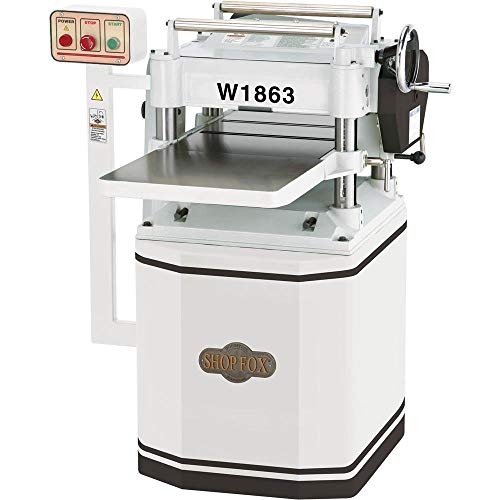
| Shop Fox W1863 15-Inch Planer | Helical finish, mid step up | Helical cutterhead, 3 HP motor |
| Powermatic 15HH 15-Inch Planer | Finish quality and durability | Helical style cutterhead, 3 HP, 230V |
| Powermatic 209HH 20-Inch Planer | Wide panels and glue-ups | 20-inch width, 5 HP, 230V |
How to Choose
Cutterhead Style: Knives or Helical Inserts
A straight knife head, like the three-knife unit on the JET JWP-15B, uses long blades that are simple to source and swap, and it planes cleanly in straight-grained stock. A helical head replaces those blades with rows of small four-sided carbide inserts. Each insert can be turned to a fresh edge when one dulls or nicks, and the staggered layout cuts with a shearing action that leaves figured grain smoother and runs quieter. The trade is upkeep style: full knife changes on a schedule, or quick insert turns at the head.
Width and Thickness Capacity
Fifteen inches of width covers most furniture parts, shelf boards and door panels a home shop produces, while a 20-inch machine like the Powermatic 209HH swallows full tabletop glue-ups in one pass. Thickness capacity matters just as much: six inches of opening handles beams, turning blanks and resawn stock, and eight inches opens up even chunkier material. Check the minimum stock length in the listing too, because short offcuts can be unsafe in a big machine. Match capacity to the widest board you realistically expect to mill, not the widest board you can imagine owning one day.
Power Supply and Motor Size
Every machine in this guide asks for 230-volt, single-phase power, so a dedicated circuit is part of the purchase. A 3 HP motor with an 11 to 15 amp draw suits a typical home-shop circuit wired for machinery, while the 5 HP Powermatic 209HH lists a 28 amp draw and a recommended 40 amp circuit in its specifications. Before ordering, confirm what your panel can supply and where the machine will sit, since moving a 500-pound cabinet after delivery day is nobody’s idea of fun. Magnetic switches with overload protection, fitted across this group, guard the motor when a deep cut bogs the head down.
Tables, Feed Speeds and Dust Collection
Long boards stay flat when the bed supports them, so look at table length and extension wings: the Powermatic 15HH stretches to 48 inches of table with its cast-iron extension tables fitted. Two feed speeds, common across this group at 16 and 20 feet per minute, let you run rough stock quickly and slow down for a finer final pass. Snipe control designs, such as the JET Precision Air Strut System, hold the cutterhead steady at the cut. Finally, plan dust collection around the port: four-inch ports suit many home collectors, while the 209HH steps up to a five-inch port and lists a 900 CFM minimum in its specifications.
The 4 Best Options
JET JWP-15B 15-Inch Planer
The JWP-15B is the natural first step into stationary planing: a floor-standing cabinet machine with a three-knife straight cutterhead and none of the complexity of an insert head. Its 3 HP motor and two feed speeds cover the rough-to-finish routine of a home shop, and the precision-ground cast-iron table rides on a four-post design that keeps settings steady. JET’s Precision Air Strut System holds upward pressure on the cutterhead to limit snipe at board ends. For woodworkers moving up from a portable planer who mostly mill straight-grained lumber, this is the straightforward route in.
Specs
- Model: JWP-15B (stock number 722150)
- Motor: 3 HP, 230V single-phase, 11 amps
- Cutterhead: straight knife, 3 knives, 5,200 RPM
- Capacity: 15-inch cutting width, 6-inch maximum stock thickness
- Maximum depth of cut: 3/16 inch (1/8 inch at full width)
- Feed speeds: 16 and 20 FPM, two speeds
- Table: cast iron, 15 x 21.45 inches
- Included components: dust port, steel extension tables, handwheel assembly, knife gauge
- Net weight: 253 pounds
- Warranty: 5 years
Best for: Home shops stepping up from a portable planer, milling mostly straight-grained stock.
Watch out for: Straight knives dull as a set and need full changes; figured grain may tear out more than with a helical head.
ASIN: B07QSCZNP8
Shop Fox W1863 15-Inch Planer
The W1863 brings a helical head to a cabinet planer without jumping to the top of this group. Its four-flute cutterhead carries 52 four-sided carbide inserts, so a nicked edge becomes a quick turn of one insert instead of a full knife change, and the shearing cut treats figured hardwood kindly. A pedestal-mounted control panel with a magnetic switch and emergency stop keeps the controls clear of the work zone, and ball-bearing return rollers on top speed up repeat passes. The cabinet stand and internally mounted motor keep the footprint tidy for a machine of this weight class.
Specs
- Model: W1863
- Motor: 3 HP, 240V, 15 amps, single-phase
- Cutterhead: helical, 4 flutes, 52 indexable four-sided carbide inserts
- Capacity: 15-inch maximum cutting width, 6-inch maximum cutting height
- Maximum depth of cut: 1/8 inch
- Feed rates: 16 and 20 FPM
- Dimensions: 37 x 48 x 44 inches
- Item weight: 553 pounds as listed
- Warranty: 2 years
Best for: Figured hardwood and quieter running in a mid-size home shop.
Watch out for: The listing specifies 240V with a 15 amp draw, so confirm your circuit matches before the crate arrives.
ASIN: B07R5QD5Q6
Powermatic 15HH 15-Inch Planer

The 15HH is the finish-first choice among the 15-inch machines here. Its Byrd helical cutterhead mounts 74 four-sided carbide inserts at an angle, so each cut is a shearing slice that leaves figured stock smooth and the shop noticeably quieter. The motor sits inside the enclosed welded-steel cabinet, the precision-ground cast-iron table extends to 48 inches with the included extension tables, and lockable casters let one person reposition a 502-pound machine. Stock return rollers on top speed repetitive work. Woodworkers who plane plenty of hardwood and value a five-year warranty will feel at home here.
Specs
- Model: 15HH (part number 1791213)
- Motor: 3 HP, 230V single-phase, 15 amps, TEFC
- Cutterhead: Byrd helical, 74 four-sided carbide inserts
- Cutterhead speed: 4,500 RPM
- Cutting width: 14.88 inches
- Maximum depth of cut: 0.13 inches
- Feed rates: 16 and 20 FPM
- Table: cast iron, 15 x 20 inches, extends to 48 inches with extension tables
- Dust port: 4 inches
- Dimensions: 48 x 28 x 43.5 inches; weight 502 pounds
- Warranty: 5 years
Best for: Hardwood-heavy home shops that prize surface finish and quiet cutting.
Watch out for: At 502 pounds, plan the delivery route, doorway widths and a helper before the crate arrives.
ASIN: B001GOEPF0
Powermatic 209HH 20-Inch Planer

The 209HH answers the one problem a 15-inch machine cannot solve: panels and glue-ups wider than the cutterhead. Its 20-inch capacity takes full tabletops in a single pass, and the 5 HP motor keeps the feed steady through dense hardwood at that width. The Byrd helical head carries 100 four-sided carbide inserts, feed speeds run 24 and 31 feet per minute with a low-speed gear kit included for slower work, and the table rides on four steel columns. This is the pick for a home shop that regularly builds wide furniture and has the panel capacity to run it.
Specs
- Model: 209HH
- Motor: 5 HP, 230V single-phase, 28 amps
- Cutterhead: Byrd helical, 100 four-sided carbide inserts
- Cutterhead speed: 5,000 RPM
- Capacity: 20-inch planing width, 8-inch maximum stock thickness
- Maximum depth of cut: 3/32 inch
- Feed rates: 24 and 31 FPM (16 and 20 FPM with included gear kit)
- Table: cast iron, 25-3/4 x 20 inches
- Dust port: 5 inches; 900 CFM minimum listed
- Net weight: about 800 pounds
- Warranty: 5 years
Best for: Wide tabletops, door panels and glue-ups in a well-wired shop.
Watch out for: The listing recommends a 40 amp circuit, and the machine weighs about 800 pounds, so wiring and floor space both need planning.
ASIN: B001GOGLUC
Which One Fits Your Situation
Milling Rough Lumber Every Week
If your shop routine begins with rough-sawn boards from a local mill, the JET JWP-15B covers the workload with simple upkeep. Straight knives are easy to source, the two feed speeds handle bulk removal and finishing passes, and the cast-iron table keeps long boards honest. It asks the least of your budget for accessories and leaves the helical upgrade for a later machine, once you know exactly how much figured stock you really mill.
Figured Hardwood and Tear-Out Worries
Curly maple, ribbon mahogany and other figured boards punish straight knives with tear-out. A helical head is the calmer tool for that stock: the Shop Fox W1863 spreads the cut across 52 small inserts, and the Powermatic 15HH adds the Byrd shear angle plus a longer table. Either machine lets you slow the feed to 16 feet per minute for the final pass and come away with a surface that needs far less sanding.
Wide Panels and Tabletop Glue-Ups
Once a glued panel passes 15 inches, a 15-inch planer forces awkward workarounds. The Powermatic 209HH takes the whole panel in one pass at up to 20 inches wide, with the motor size to keep feeding through dense species. If tabletops, bench tops and wide door panels anchor your project list, this is the machine in the group built around them, provided your panel can supply the circuit its listing recommends.
One 230V Circuit and a Tight Garage
Floor space and wiring shrink the field fast in a garage shop. The three 3 HP machines here draw 11 to 15 amps on 230V, far easier to serve than the 209HH and its recommended 40 amp circuit. Among them, the Powermatic 15HH rolls on lockable casters, so it can park against a wall and pull out for long boards, while the Shop Fox W1863 keeps its motor inside the cabinet for a tidy footprint.
Common Mistakes
- Ordering before checking the panel: every machine here needs 230V single-phase power, and the 209HH recommends a 40 amp circuit, so confirm capacity first.
- Underestimating delivery: these planers weigh from 253 to about 800 pounds, arrive crated, and need a planned route into the shop.
- Taking full-width cuts at maximum depth: wide hardwood at the listed depth limit strains the motor; lighter passes protect both machine and surface.
- Skipping dust collection sizing: a 15-inch planer fills a small collector quickly, and the 209HH lists a 900 CFM minimum for its five-inch port.
- Feeding short offcuts: respect the minimum stock length in the listing, since very short pieces can behave unpredictably between the rollers.
Frequently Asked Questions
How much floor space does a stationary planer need?
Plan around the machine footprint plus working room at both ends for the longest boards you mill. The Powermatic 15HH measures 48 x 28 x 43.5 inches and the Shop Fox W1863 measures 37 x 48 x 44 inches, and both need clear infeed and outfeed paths. Casters, fitted to the 15HH, help a tight shop share the space.
Can these planers run on a normal household outlet?
No. Every listing in this guide specifies 230-volt, single-phase power rather than a 120-volt household circuit. The 3 HP models draw 11 to 15 amps, and the Powermatic 209HH lists a 28 amp draw with a recommended 40 amp circuit. Most home shops add a dedicated circuit, and an electrician can confirm what your panel supports.
How do helical inserts reduce upkeep?
Each carbide insert has four cutting edges. When one edge dulls or nicks, you loosen its screw, turn the insert to a fresh edge and tighten it again, with no full knife change and no setting gauge. The Shop Fox W1863 carries 52 inserts and the Powermatic 15HH carries 74, so a single damaged spot touches only one small insert.
What dust collection do these machines need?
Match the collector to the port on the machine. The Powermatic 15HH uses a four-inch port, common on home-shop collectors, while the Powermatic 209HH steps up to a five-inch port and lists a 900 CFM minimum in its specifications. A thickness planer produces a heavy chip load, so an undersized collector will clog long before the job ends.
More from Amazon
Programs that pair well with the guide above. Offers and eligibility are set by Amazon and may change.
Free shipping on eligible items, Prime Video and more. Eligible new members can start with a free trial.
Start a Prime free trialAd-free music streaming. Eligible new subscribers can start with a free trial.
Try Music Unlimited freeA Prime membership for ages 18-24 with a trial period. Eligibility is set by Amazon.
See Prime for Young AdultsAudiobooks and podcasts to listen to on the go. Eligible new members can start with a free trial.
Try Audible freeAs an Amazon Associate we earn from qualifying purchases.
Write Your Review
No reviews yet. Be the first to share your experience!