

Key takeaways
- Compare three inverter TIG welders with digital displays for aluminum, stainless steel, and home shop work, with display, AC/DC, and dual-voltage guidance.
A digital display changes how a TIG welder feels, because it turns guesswork into a number you can read at a glance. Instead of judging amperage by the position of a knob, you see the current, the mode, and the voltage before the arc starts. That matters most on thin material, where a small change can burn through. The real decision is not whether a display looks modern; it is whether the screen shows the settings you actually adjust, whether the machine covers the metals you weld, and whether your outlet can feed it.


This guide is for home shop welders, hobby fabricators who weld stainless steel and aluminum on weekends, and small repair shops that need one machine for several jobs. Each pick is an inverter TIG welder whose Amazon listing names a digital or LED display, with every specification from that listing. The three differ usefully: one is a full AC/DC unit for aluminum, one adds six modes, and one keeps it simpler with DC TIG and pulse.
Quick Picks
As an Amazon Associate we earn from qualifying purchases.
| Product | Best for | Key spec from title |
|---|---|---|
| YESWELDER TIG-200P ACDC | Aluminum and stainless steel work with pulse control | 200A AC/DC with large LED display |
| TOOLIOM TL-200TP ACDC PRO | Varied jobs needing six welding modes | 200A AC/DC with large LED display |
| YESWELDER TIG-205P PRO | DC TIG and stick work with a foot pedal in the box | Large LED display with foot pedal control |
How to Choose
Read What the Display Actually Shows
A screen earns its place only when it shows the numbers you adjust while welding, so look past the word display in the title and check which values the listing names. The useful screens in this guide show welding current, the selected mode, and voltage, letting you set amperage before the arc starts and confirm the mode you expect. A display that shows a single number leaves you guessing about the rest, and a small dim screen is hard to read under shop lights or through a helmet. Check whether the listing calls the screen LED or LCD, whether it updates while you weld, and whether the controls beside it are labeled clearly enough to use with gloves on.
Match AC and DC Output to Your Metals
The metals on your bench decide whether you need AC output. DC TIG handles mild steel and stainless steel well, and it is the right choice when those two metals cover nearly everything you weld. Aluminum needs AC output, because the alternating current breaks up the oxide layer on the surface while the arc runs, and a DC-only machine cannot do that job no matter how high you set the amperage. If aluminum appears in your plans at all, choose an AC/DC machine now rather than discovering the limit halfway through a project. The two AC/DC picks in this guide cover aluminum, while the DC-only pick suits steel and stainless work.
Check Dual Voltage and the Amperage Range
Your shop wiring sets a hard ceiling on what a welder can do. A dual-voltage machine runs on a standard household outlet and on a higher-voltage workshop circuit, and the listing for each pick here names both 110V and 220V input. The same machine welds thicker material on the higher-voltage input, because it can draw more power and sustain a hotter arc, so check the thickness figures for each voltage rather than trusting one headline number. A 200-amp ceiling covers a wide range of home shop work, from thin sheet to plate, while a lower ceiling suits light repair. Match the amperage to the thickest material you weld regularly, not to the thickest piece you might touch once.
Weigh Pulse, Arc Starting, and What Ships in the Box
Pulse control, arc starting, and included accessories separate machines that look identical on a spec sheet. Pulse lets the current alternate between a high peak and a lower background level, which puts less heat into thin material and helps control the puddle on stainless steel and thin aluminum. High-frequency start lights the arc without touching the tungsten to the work, keeping the tungsten clean, while lift start asks for a light touch and suits simpler machines. Before choosing, check the listing for the torch, ground clamp, gas hose, and foot pedal, because an accessory in the box is part of the machine you are comparing, and one bought separately changes the setup you receive.
The 3 Best Options
YESWELDER TIG-200P ACDC
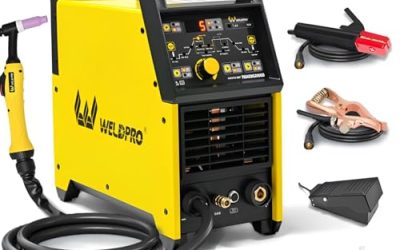
This is the pick for welders who want AC/DC capability and a clear screen in one machine, and it suits home shops that move between aluminum, stainless steel, and mild steel in the same week. The large LED display shows current, function mode, and welding mode, so you can confirm the setup before the arc starts and adjust without stopping to interpret knob positions. Pulse control and high-frequency start give you finer heat control on thin material, and the dual-voltage input lets the same machine run on a household outlet or a workshop circuit. It is a strong fit for fabricators who weld aluminum occasionally.
Specs
- 200A maximum output
- AC/DC TIG and stick welding
- Large LED display showing current, function mode, and welding mode
- Pulse TIG mode
- High-frequency, non-touch arc start
- Hot start and anti-stick for stick welding
- Auto memory for settings
- Dual voltage 110V/220V input
- Digital inverter with square wave AC/DC output
- Aluminum capable
Best for: Home shop welders who weld aluminum, stainless steel, and mild steel and want pulse control with a readable display.
Watch out for: Confirm that your shielding gas setup and tungsten match the metals you plan to weld, because the machine does not remove the need for argon and the right tungsten type.
TOOLIOM TL-200TP ACDC PRO
This is the pick for welders who want the widest set of modes in this guide, and it suits small shops where no two jobs are alike. Six modes cover AC TIG, DC TIG, AC pulsed TIG, DC pulsed TIG, stick, and spot welding, so one machine moves from aluminum fabrication to stainless repair to tack work without changing equipment. The large digital display shows mode, voltage, and current in real time, making settings easy to track as a weld progresses. Its square wave AC/DC inverter output and fish-scale waveform suit aluminum work, and dual-voltage input keeps it usable in a garage or a better-equipped workshop.
Specs
- 200A maximum output
- Six welding modes: AC TIG, DC TIG, AC pulsed TIG, DC pulsed TIG, stick, and spot welding
- Large digital display showing mode, voltage, and current
- Dual voltage 110V/220V input
- Square wave AC/DC inverter with fish-scale waveform
- Maximum welding thickness of 1/8 inch at 110V and 3/16 inch at 220V
- IGBT inverter technology
- Aluminum capable
Best for: Small shops and hobby fabricators who want six welding modes and a real-time display for varied aluminum and steel work.
Watch out for: A foot pedal is described as an option for this machine rather than an included accessory, so check the listing carefully if pedal control matters to the way you weld.
YESWELDER TIG-205P PRO

This is the pick for welders who work mainly with steel and stainless steel and want a straightforward DC machine with a foot pedal included. The large LED display shows current, function mode, and welding mode clearly, and the three modes cover stick, DC TIG, and pulsed TIG without the extra settings an AC/DC machine demands. The included foot pedal gives hands-free amperage control, which helps when you need to taper heat at the end of a bead or adjust while holding the torch steady. Dual-voltage input with auto-sensing keeps setup simple when moving between outlets, and hot start with arc force helps stick electrodes light cleanly.
Specs
- 200A maximum output
- STICK, DC TIG, and pulsed TIG modes
- Large LED digital display showing current, function mode, and welding mode
- Foot pedal included with 5-pin plug and adjustable control
- Dual voltage 110V/220V input with auto-sensing
- Hot start and arc force for stick welding
- Lightweight, portable design
Best for: Welders focused on steel and stainless steel who want DC TIG with pulse and an included foot pedal.
Watch out for: The listing gives conflicting output figures, with the title naming 205 amps while the specification table lists 200 amps as the maximum and mentions up to 250 amps with the foot pedal, so treat 200 amps as the safe planning figure and confirm the listing before ordering.
Which One Fits Your Situation
You Weld Aluminum Regularly
Choose the YESWELDER TIG-200P ACDC when aluminum is a regular part of your work, because its AC output handles the oxide layer that DC-only machines cannot break through. The large LED display and pulse control help on thin aluminum, where heat control decides the result, and the dual-voltage input keeps the machine usable across shop setups. Pair it with the right tungsten and argon, and it covers stainless steel and mild steel as well.
You Want One Machine for Many Different Jobs
Choose the TOOLIOM TL-200TP ACDC PRO when your jobs change from week to week and you want the broadest mode list in this guide. Six modes move the machine from aluminum TIG to stainless repair to spot welding without a second unit, and the real-time display shows mode, voltage, and current as you work. It suits a small shop where versatility matters more than keeping the controls minimal.
You Weld Steel and Stainless and Want Pedal Control
Choose the YESWELDER TIG-205P PRO when your work centers on steel and stainless steel and you want foot pedal control without buying it separately. The included pedal lets you ease amperage up and down during a bead, the LED display keeps settings visible, and the three-mode layout stays simple to learn. It is the most direct choice of the three when aluminum is not on your list.
You Are Setting Up a First Home TIG Station
Choose the YESWELDER TIG-205P PRO for a first DC TIG station, or the YESWELDER TIG-200P ACDC when you expect aluminum to join your projects later. The 205P PRO keeps the learning curve short with three modes and a pedal in the box, while the 200P ACDC adds AC output so the machine still fits when your skills and materials expand. Either way, confirm your outlet voltage and gas supply before the machine arrives.
Safety Notes
TIG welding produces intense ultraviolet light, hot metal, sparks, and fumes, so treat safety gear as part of the machine rather than an optional extra. Wear an auto-darkening welding helmet, welding gloves, and flame-resistant clothing, and keep bystanders, especially children, away from the arc and its reflected light. Weld in a ventilated area or with extraction, because welding fumes and shielding gas can displace air in a closed space. Check that the machine input voltage matches your outlet, keep the work area dry, keep flammable material clear of sparks and hot metal, and secure the gas cylinder so it cannot fall. Let every weld cool before handling it, and inspect cables, the torch, and the ground clamp for damage before each session.
Common Mistakes
- Buying a DC-only machine and then discovering it cannot weld aluminum.
- Choosing by headline amperage alone without checking what the machine delivers on your available input voltage.
- Assuming a foot pedal ships in the box when the listing describes it only as an option.
- Skipping the display check and ending up with a screen that shows too little to set amperage with confidence.
- Starting a weld without the right tungsten and shielding gas for the metal in front of you.
Frequently Asked Questions
Do I need AC output to weld aluminum with a TIG welder?
Yes, aluminum needs AC output because the alternating current breaks up the oxide layer on the surface while you weld. A DC-only TIG machine cannot do this properly, no matter how high you set the amperage, so choose an AC/DC machine like the YESWELDER TIG-200P ACDC or the TOOLIOM TL-200TP ACDC PRO when aluminum is part of your work.
What does the digital display show on these welders?
The displays on the machines in this guide show welding current, the selected mode, and voltage, so you can set amperage before striking an arc and confirm the machine is in the mode you expect. A screen that updates in real time also helps you track changes during a weld. Check the listing for each model, because the exact values shown differ between machines.
Can these welders run on a standard household outlet?
Yes, all three machines in this guide accept dual-voltage input at 110V and 220V, so they can run on a standard household outlet. Output and the thickest material you can weld are lower on the household outlet than on the higher-voltage circuit, so check the thickness figures for each voltage in the listing before planning a heavy job.
Is a foot pedal necessary for TIG welding?
A foot pedal is not necessary, but it gives hands-free amperage control that many welders value for starting a bead gently and tapering heat at the end. The YESWELDER TIG-205P PRO ships with a foot pedal in the box, while the TOOLIOM TL-200TP ACDC PRO describes the pedal as an option, so confirm the listing when pedal control matters to you.
More from Amazon
Programs that pair well with the guide above. Offers and eligibility are set by Amazon and may change.
Free shipping on eligible items, Prime Video and more. Eligible new members can start with a free trial.
Start a Prime free trialAd-free music streaming. Eligible new subscribers can start with a free trial.
Try Music Unlimited freeA Prime membership for ages 18-24 with a trial period. Eligibility is set by Amazon.
See Prime for Young AdultsAudiobooks and podcasts to listen to on the go. Eligible new members can start with a free trial.
Try Audible freeAs an Amazon Associate we earn from qualifying purchases.
Write Your Review
No reviews yet. Be the first to share your experience!